Introduction
Understanding the place
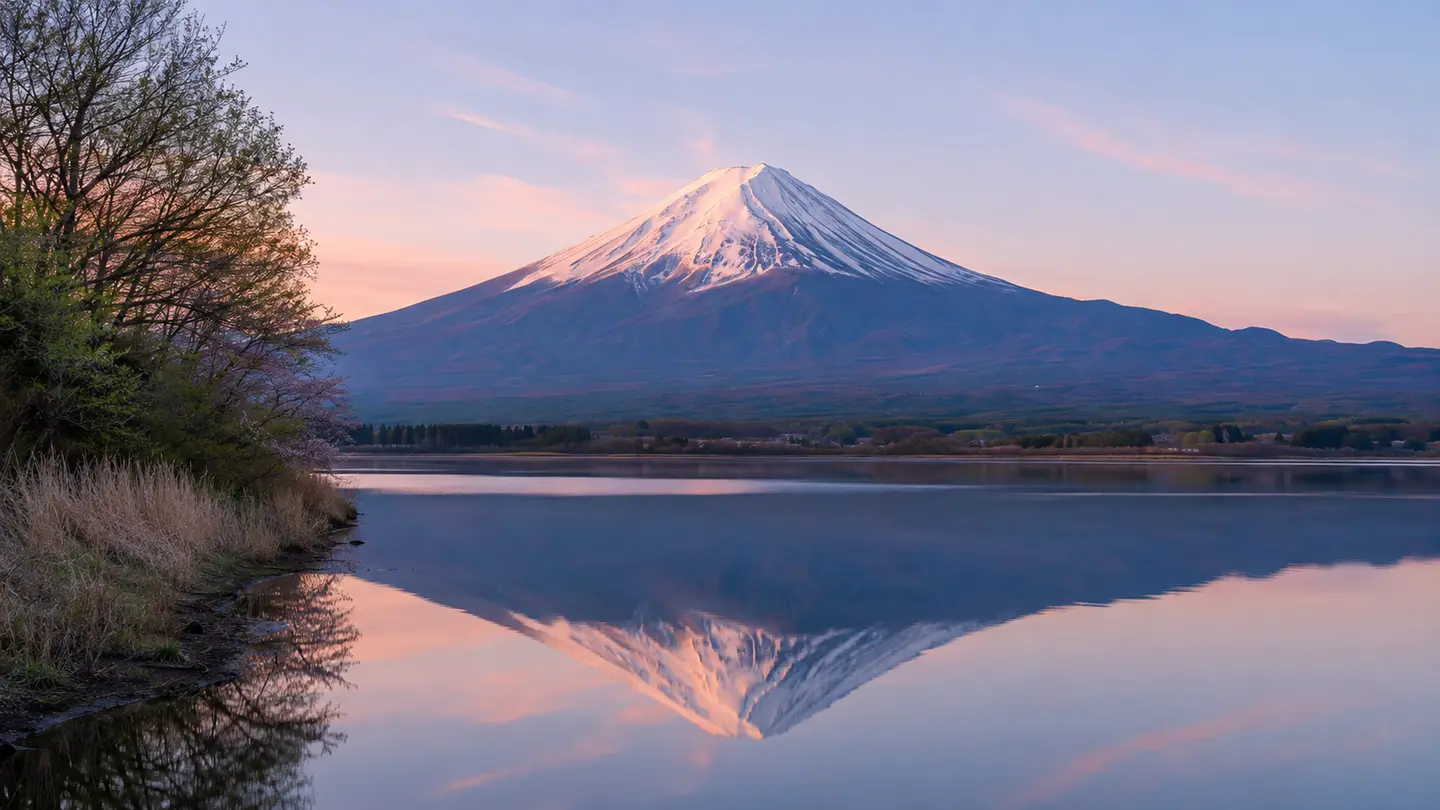
Mount Fuji is both volcano, sacred mountain, pilgrimage site and major Japanese art motif. Its silhouette links Shinto, Buddhism and popular culture.
To be retained
- Active volcano and sacred mountain
- Shinto, Buddhism and mountain asceticism
- World famous artistic motif
- Pilgrimage today very frequented
History and context
The active volcano has long been a source of fear and respect. Mountain ascetics and Fuji-kō brotherhoods are organizing pilgrimages. The gradual opening of ascent to women is linked to the religious and social transformations of modern times.
Why is this place spiritual?
In different traditions, Fuji is a kami, a place of purification or accese support. Worshipes have varied according to the times; there is no single doctrine of the mountain.
What the landscape makes you feel
Seeing the cone from the lakes or completing the ascent are two very different experiences. The crowd, the rapid weather and the effort remind that the perfect image of prints does not summarize the real volcano.
Energy, atmosphere and feelings
The isolated form of Fuji naturally nourishes a language of power. Geology explains the volcano; religion and art explain the meanings, without it being necessary to oppose or confuse them.
Discover with respect
- Prepare for ascent and respect official periods.
- Limit waste on trails.
- Recognize the stories of exclusion and opening of the pilgrimage.
Sources