Introduction
Understanding the place
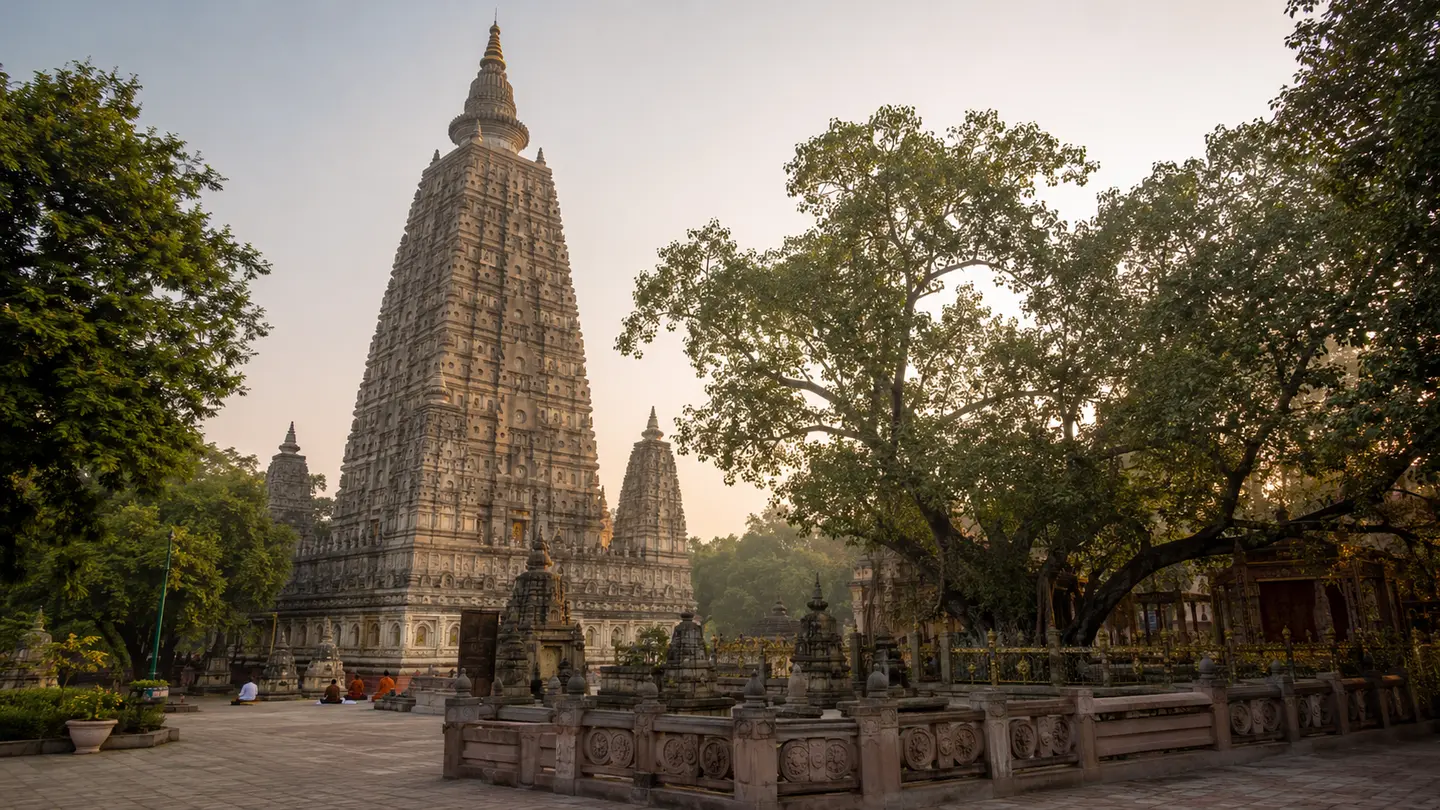
Bodh-Gaya is the most important Buddhist pilgrimage site, associated with the awakening of Siddhartha Gautama under the tree of the Bodhi.
To be retained
- Traditional Buddha Awakening Place
- Temple of Mahabodhi
- Pilgrimage shared by many schools
- Bodhi tree in the heart of the site
History and context
The emperor Ashoka would have marked the place in the third century BCEE. The temple of Mahabodhi in its present form dates mainly from the early centuries CE, with many restorations. A traditional descendant of the tree of the Bodhi grows near the sanctuary.
Why is this place spiritual?
The site embodies awakening, understanding of suffering and the possibility of a path of liberation. Communities theravāda, mahāyāna and vajrayāna perform their practices in various forms.
What the landscape makes you feel
Around the temple, prosternations, silent meditation, songs and circumambulation coexist. International diversity reminds that Buddhism is not a uniform tradition.
Energy, atmosphere and feelings
Many pilgrims describe a high quality of presence under the tree. Orabel respects this testimony while distinguishing it from a scientific measure and enrolling it in the power of the founding narrative and collective practice.
Discover with respect
- Keep silence near the meditators.
- Ask before photographing the practices.
- Recognize the diversity of Buddhist schools present.
Sources