Introduction
Understanding the place
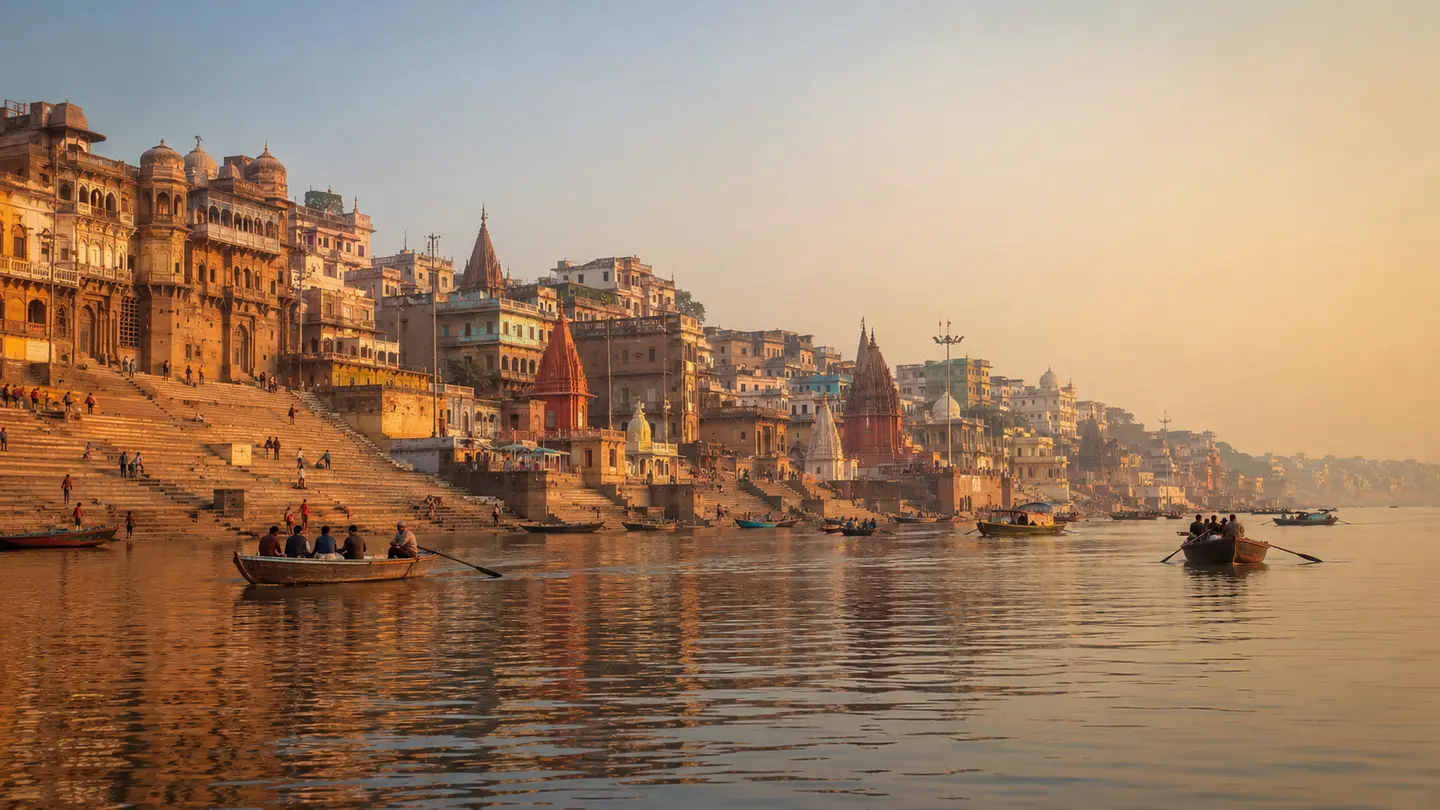
Varanasi, or Kashi, is one of the most holy cities of Hinduism. Its ghats welcome ritual baths, prayers, cremations and pilgrimages in an intensely living urban space.
To be retained
- Holy City of Hinduism
- Bath and cremation ghats
- Honored Gang as a Sacred River
- Life, death and liberation closely linked
History and context
An ancient city of the gangetic plain, Varanasi has long been a religious, intellectual and commercial centre. Temples, monasteries and neighborhoods have been destroyed, rebuilt and transformed. The city is also close to Sarnath, a major place of Buddhism.
Why is this place spiritual?
For many Hindus, dying in Kashi or performing certain rites can be associated with the liberation of the cycle of rebirths. The Ganges is honored as goddess and purifier river. These beliefs have multiple interpretations and coexist with the health realities of the river.
What the landscape makes you feel
At dawn, the boats reveal the continuity of the ghats, the bell sounds and the gestures of water. Cremations are not a spectacle: they demand absolute restraint and respect for families.
Energy, atmosphere and feelings
Varanasi's intensity is due to sensory density, the explicit relation to death and centuries of pilgrimage. The notions of śakti or sacrality must be repositioned in Indian traditions rather than converted into promises of wellbeing.
Discover with respect
- Never photograph cremations or bereavements intrusively.
- Respect the Ganges while recognizing the pollution issues.
- Avoid reducing the city to an exotic image of death.
Sources