Introduction
Understanding the place
Ise Jingū is home to many shrines, including Naikū dedicated to Amaterasu and Gekū in Toyuk. It occupies a central place in the Japanese shinto.
To be retained
- Major Sanctuary of Amaterasu
- Riturine reconstruction every 20 years or so
- Forest and sober architecture
- Continuity based on transmission
History and context
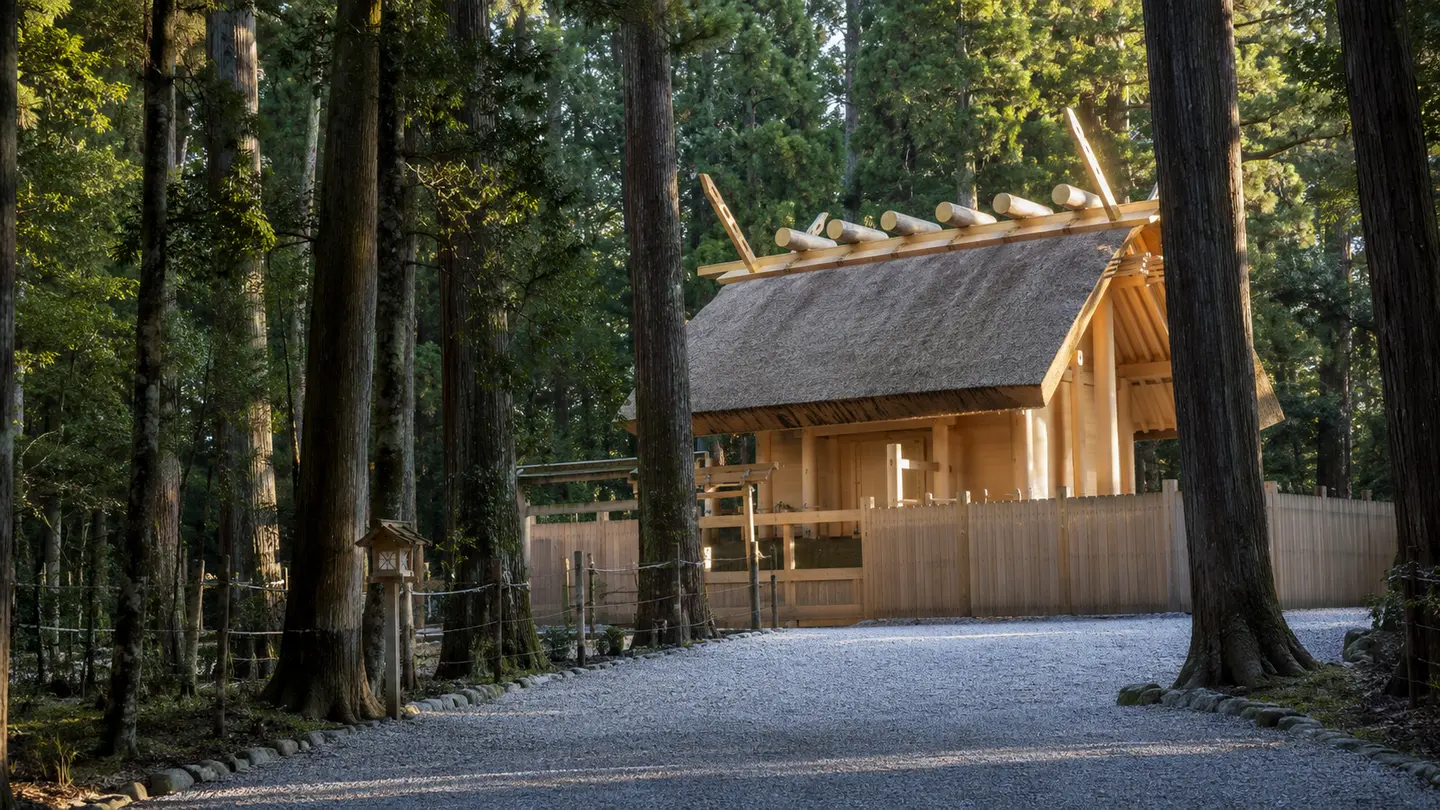
Traditional origins are old, while institutional forms develop over the long term. Every 20 years or so, Shikinen Sengū reconstructs the main buildings according to techniques transmitted, the last full ceremony having taken place in 2013.
Why is this place spiritual?
The sanctuary emphasizes purity, gratitude and the relationship to kami. Reconstruction is not a loss of authenticity: it allows the transmission of know-how and ritually renews space.
What the landscape makes you feel
The passage under the torii, gravel roads and the forest lead to enclosures whose most sacred parts remain largely hidden. This visual restraint is part of the experience.
Energy, atmosphere and feelings
The serenity of cedars and the rigour of the thresholds can be felt intensely. However, the concept of kami shinto and purification practices do not translate exactly into "energy" in the New Age sense.
Discover with respect
- Purify at water points when requested.
- Respect areas without photography.
- Do not cross the limits of sacred enclosures.
Sources