Introduction
Understanding the place
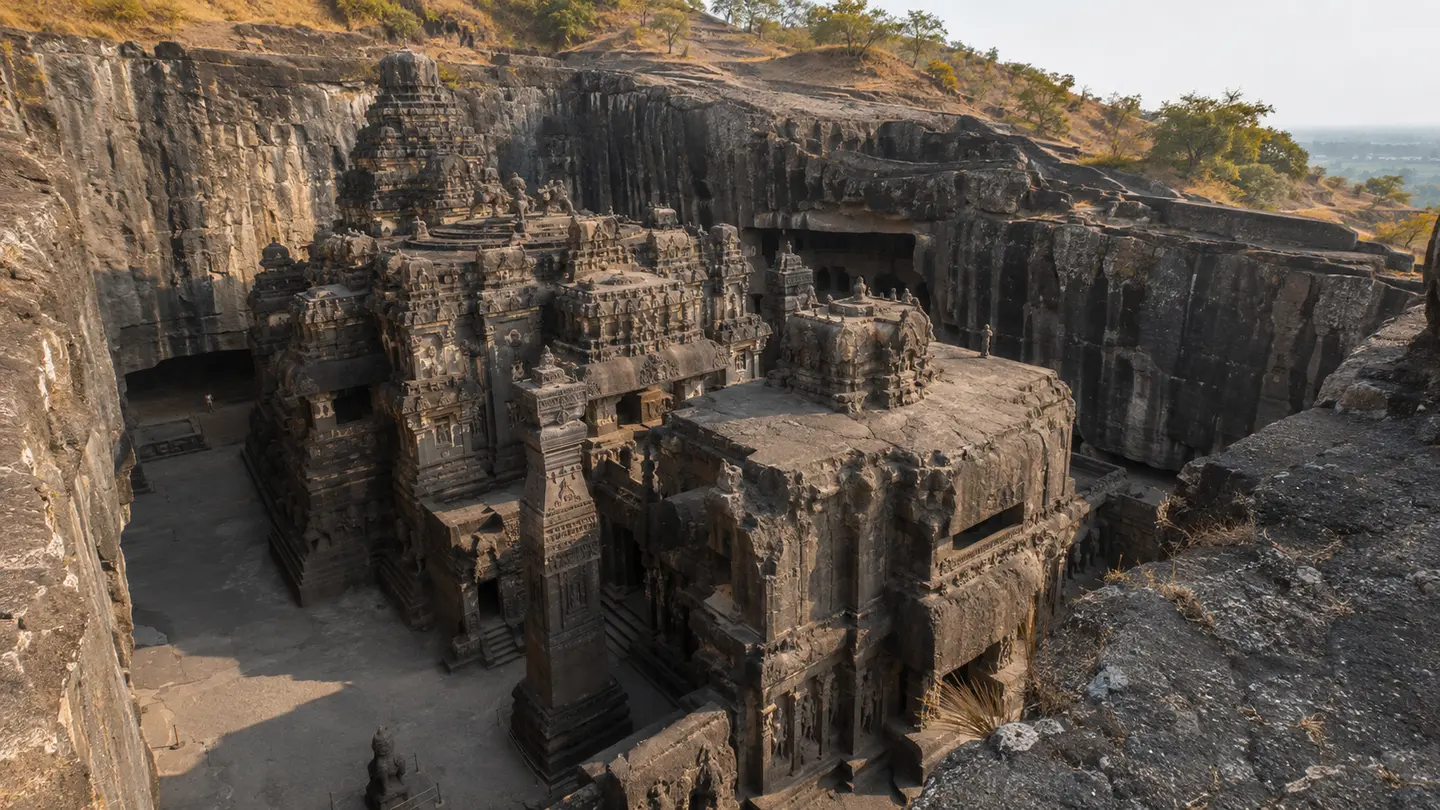
Ellora gathers Buddhist, Hindu and Jain caves over several kilometres. Kailasanatha temple, excavated around a rock mass, is his most spectacular work.
To be retained
- Buddhism, Hinduism and Jainism
- Kailasanatha monolithic temple
- Excavation over centuries
- Proximity without doctrinal fusion
History and context
The 34 main caves are built between the 6th and 10th centuries, with distinct phases and patterns. The 8th century Kailasa temple is carved from top to bottom and transforms the cliff into autonomous architecture.
Why is this place spiritual?
Each cave group expresses its own cosmologies, images and practices. Their proximity shows a history of coexistence and succession, but does not mean that the three religions formed a common doctrine.
What the landscape makes you feel
The passage from Buddhist halls to Hindu temples and then Jain temples reveals changes in rhythm, scale and iconography. The Kailasa gives the paradoxical impression of a building built when it was liberated from rock.
Energy, atmosphere and feelings
Technical virtuosity sometimes feeds into impossible technological stories, but rather demonstrates a cumulative mastery of the construction site, sculpture and human organization.
Discover with respect
- Respect the shrines still frequented.
- Do not merge traditions into a unique spirituality.
- Avoid theories denying historical know-how.
Sources