Introduction
Understanding the place
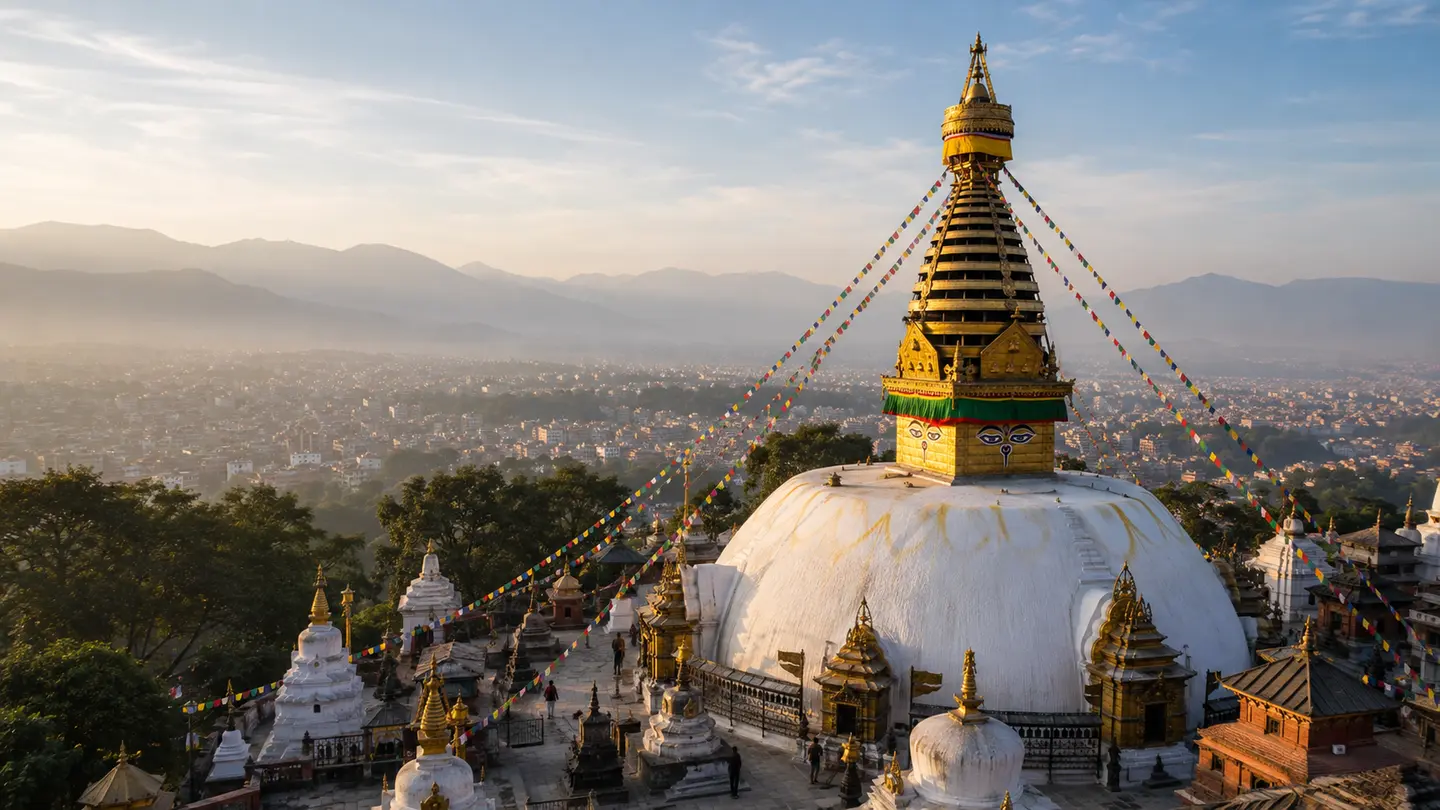
Swayambhunath dominates Kathmandu from a wooded hill. Its great stūpa, shrines and prayer mills form a complex place of devotion frequented by Buddhists and Hindus.
To be retained
- Major Stūpa of the valley
- Newar Buddhism and Hindu Presence
- Panorama on Kathmandu
- Circumambulation at the heart of the visit
History and context
The site has ancient origins related to the legends of the formation of the valley. Registrations attest to its importance from the early centuries CE. Earthquakes, restorations and additions produced a laminate ensemble rather than a monument of one era.
Why is this place spiritual?
The stūpa symbolically represents the path of awakening. Eyes painted on the harmika are often understood as the gaze of wisdom. The place also shows the profound interactions between vajrayāna newar Buddhism and Nepali Hinduism.
What the landscape makes you feel
The steep staircase, flags, monkeys and views of the city create a strong transition between urban agitation and ritual space. Circumambulation is traditionally done in the clockwise direction.
Energy, atmosphere and feelings
The feeling of openness can come from the height, circular movement and repetition of mantras. These observable elements suffice to describe the atmosphere without pretending to measure an energy of the stūpa.
Discover with respect
- Turn around the stūpa clockwise.
- Do not touch ritual objects without understanding their use.
- Respect the cohabitation of several traditions.
Sources