Introduction
Understanding the place
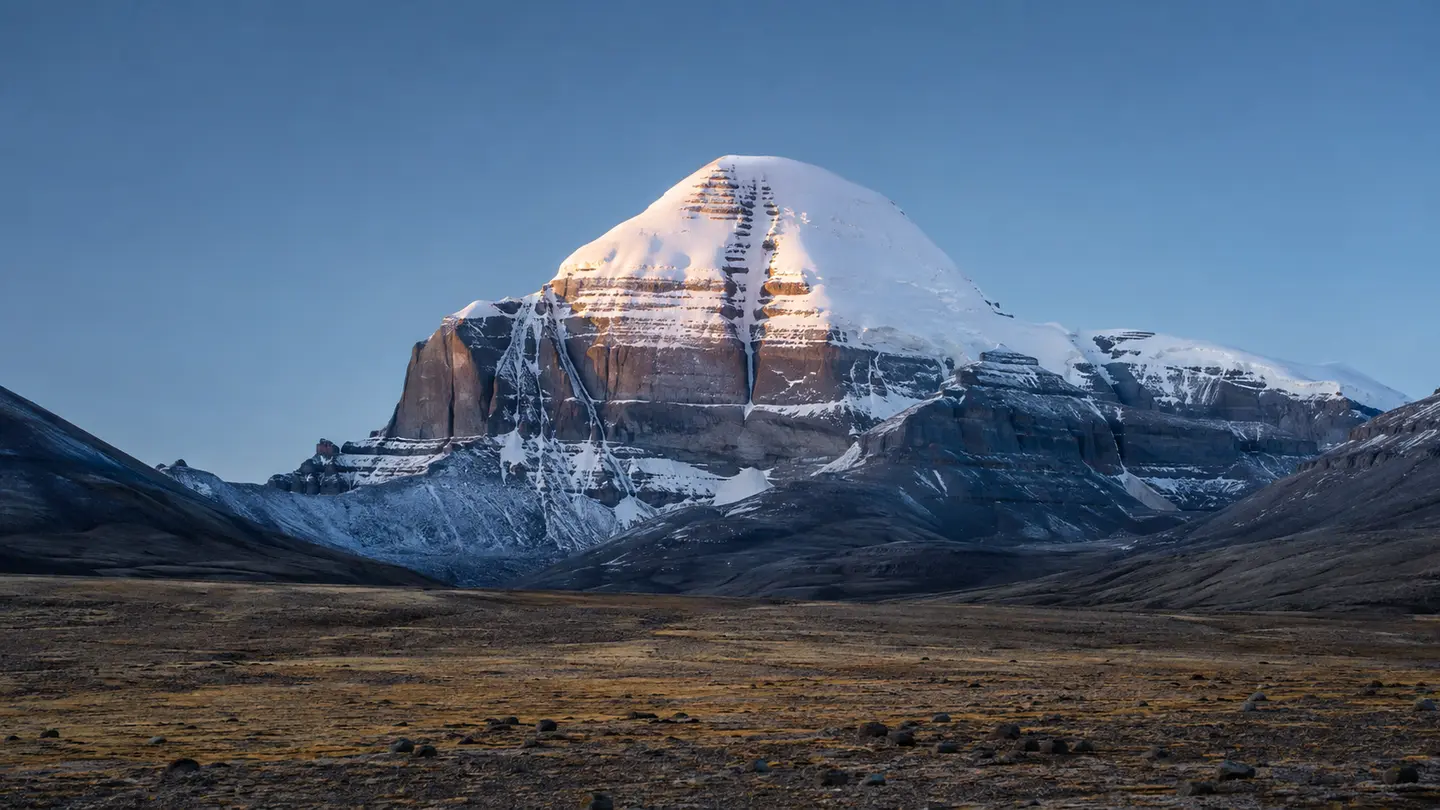
Mount Kailash is sacred to Hindus, Buddhists, Jain and Bön followers. Pilgrims carry out the circumambulation, or kora, in an environment of very high altitude.
To be retained
- Sacred mountain for four traditions
- Circumambulation rather than ascension
- Very high altitude
- Separate cosmologies not to be merged
History and context
The summit and the nearby lakes have long been part of the sacred geographies of Asia. The stories of Shiva, Mount Meru, 的abhanātha or Bön figures give instead distinct meanings. There is not a single common history that would merge them.
Why is this place spiritual?
To go around the mountain can be understood as purification, merit, devotion or transformation according to tradition. Some pilgrims prostrate on the whole route. The summit is traditionally not climbed out of respect for its sacrality.
What the landscape makes you feel
The high altitude, cold, vast plateaus and isolated silhouette impose a great physical humility. The journey also depends on political, administrative and environmental conditions that must not be masked by the mythical image.
Energy, atmosphere and feelings
Kailash is frequently presented as a "energy center of the Earth." This contemporary formulation is not a scientific data and does not replace the precise cosmologies of the four traditions.
Discover with respect
- Do not promote the climb of the summit.
- Prepare seriously the risks associated with altitude.
- Respect the diversity of traditions and Tibetan context.
Sources