Introduction
Understanding the place
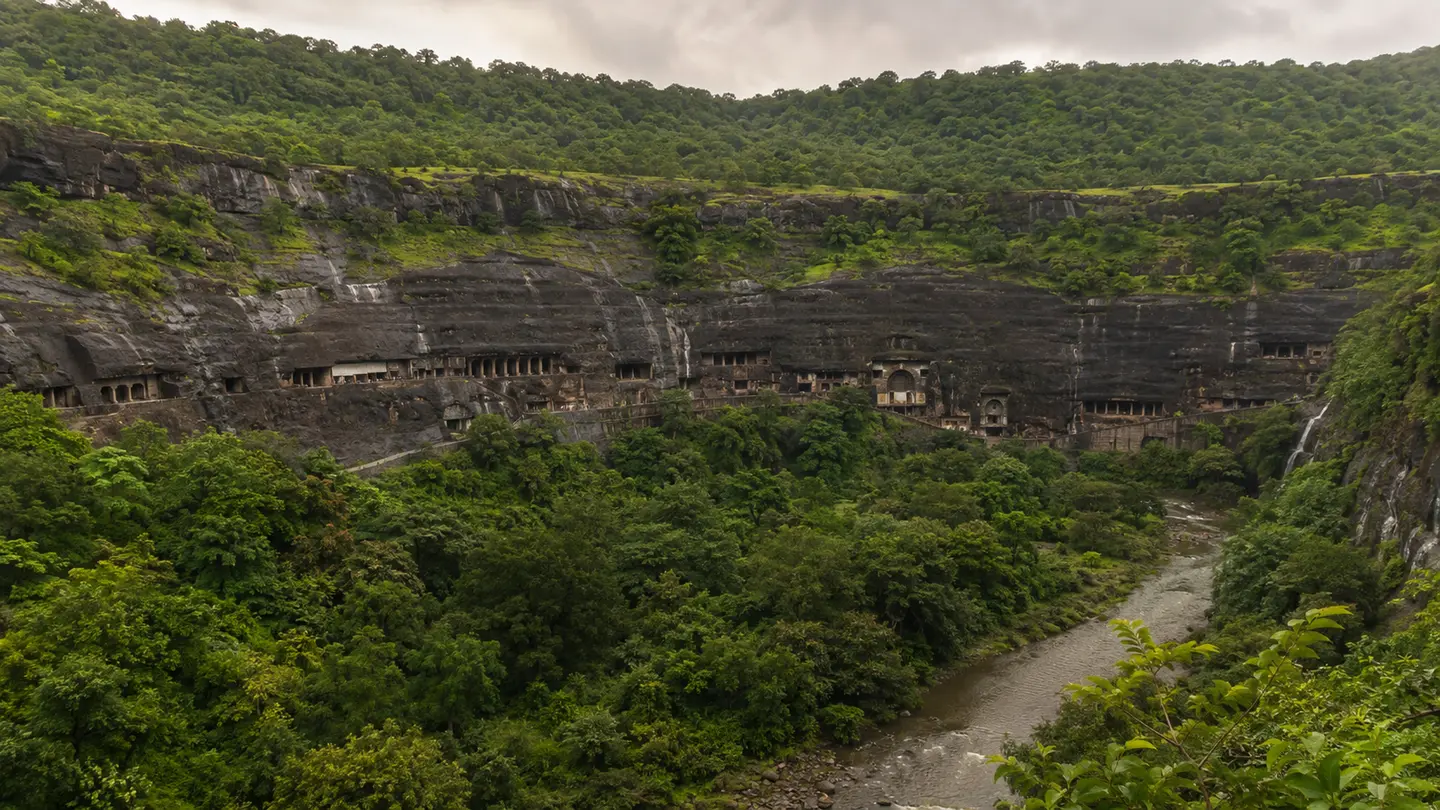
The caves of Ajanta form a Buddhist ensemble of prayer rooms and monasteries carved in a gorge, famous for its ancient paintings and sculptures.
To be retained
- Monasteries and rock prayer rooms
- Major Buddhist paintings
- Two major construction phases
- Extreme Fragility of Works
History and context
A first phase was dug around the 2nd and 1st centuries BCEE., and a second major phase developed in the 5th and 6th centuries. The whole was gradually abandoned and again attracted scholarly attention in the 19th century.
Why is this place spiritual?
The chaitya welcome the veneration of the stūpa, while the vihāra house monastic life. The paintings of the Buddha's previous lives transmit teachings, virtues and models of compassion in a sophisticated visual language.
What the landscape makes you feel
The curve of the cliff reveals the facades one by one. Inside, the light protects the paintings but asks the look to slow down. The acoustics of the prayer rooms remind the original sound dimension.
Energy, atmosphere and feelings
The enveloping effect of caves comes from darkness, echo, rock and iconography. These perceptible characteristics can explain the feeling without invoking hidden energy.
Discover with respect
- Never use flashes or touch paints.
- Talk in the closed spaces in a low voice.
- Recognize the different historical phases of Indian Buddhism.
Sources