Introduction
Understanding the place
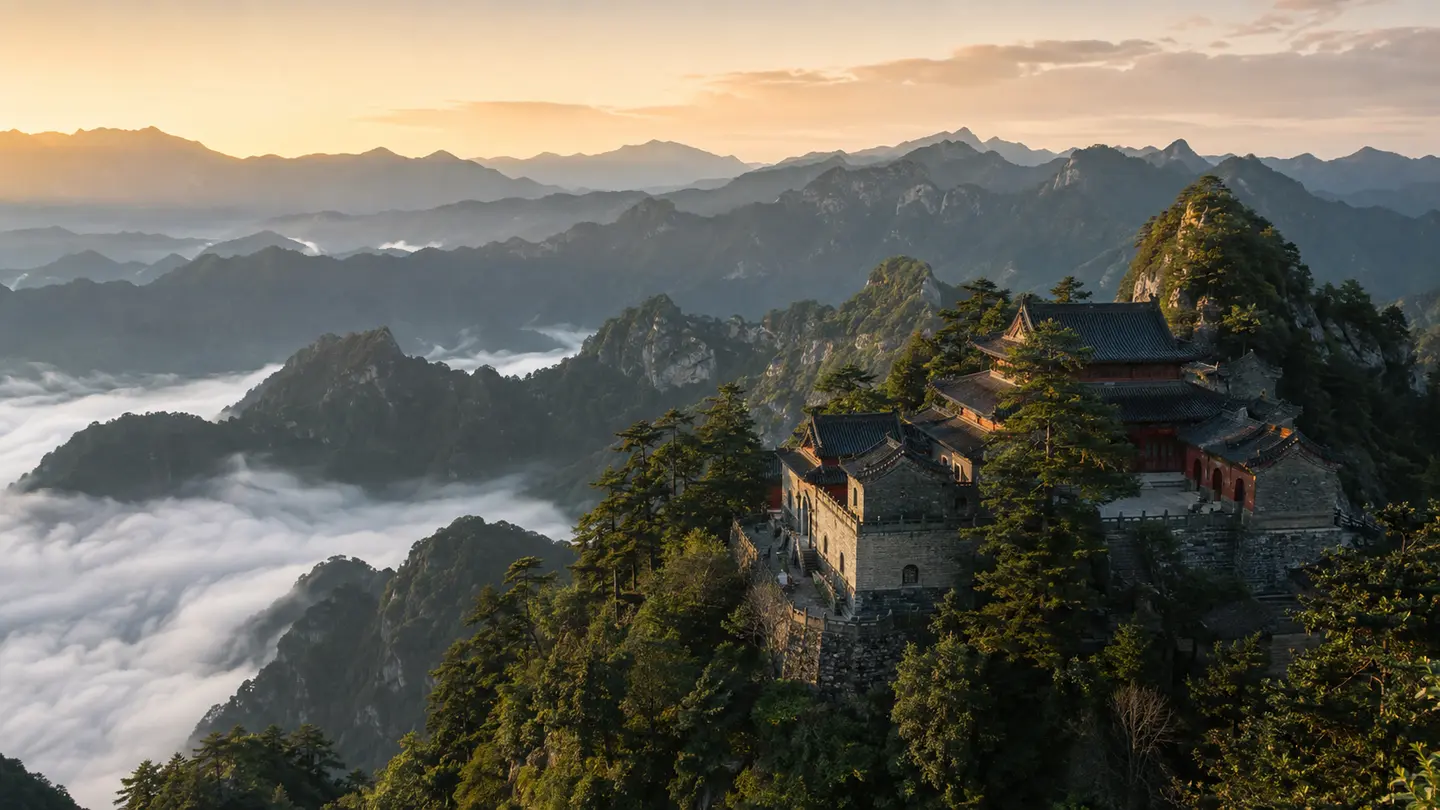
The Wudang Mountains house a vast set of Taoist temples associated with Zhenwu, meditation and, in modern culture, internal martial arts.
To be retained
- Taoist sacred landscape
- Major architecture of the Ming era
- Association in Zhenwu
- Internal arts between history and legend
History and context
Religious communities develop over the long term. Emperors Ming support important construction projects in the 15th century, organizing temples according to the mountain. Wars, fires and restorations have transformed the whole.
Why is this place spiritual?
Wudang is linked to the ritual taoism, the quest for harmony and cultivation practices. The association with Zhang Sanfeng and the origin of the taijiquan largely belongs to later traditions and is not limited to a certain biographical fact.
What the landscape makes you feel
The stairs, ridges, fog and roofs laid in the forest give the landscape continuity between nature and architecture. The slow rise contrasts with the spectacular image of the mediated martial arts.
Energy, atmosphere and feelings
qì belongs to complex traditional Chinese frames. Presenting it as an energy identical to a modern physical grandeur is misleading, even if breathing, motion and attention have observable effects.
Discover with respect
- Respect active temples and communities.
- Avoid simplified myths about the origin of all martial arts.
- Distinguish traditional qì and measurable energy in physics.
Sources