Introduction
Understanding the place
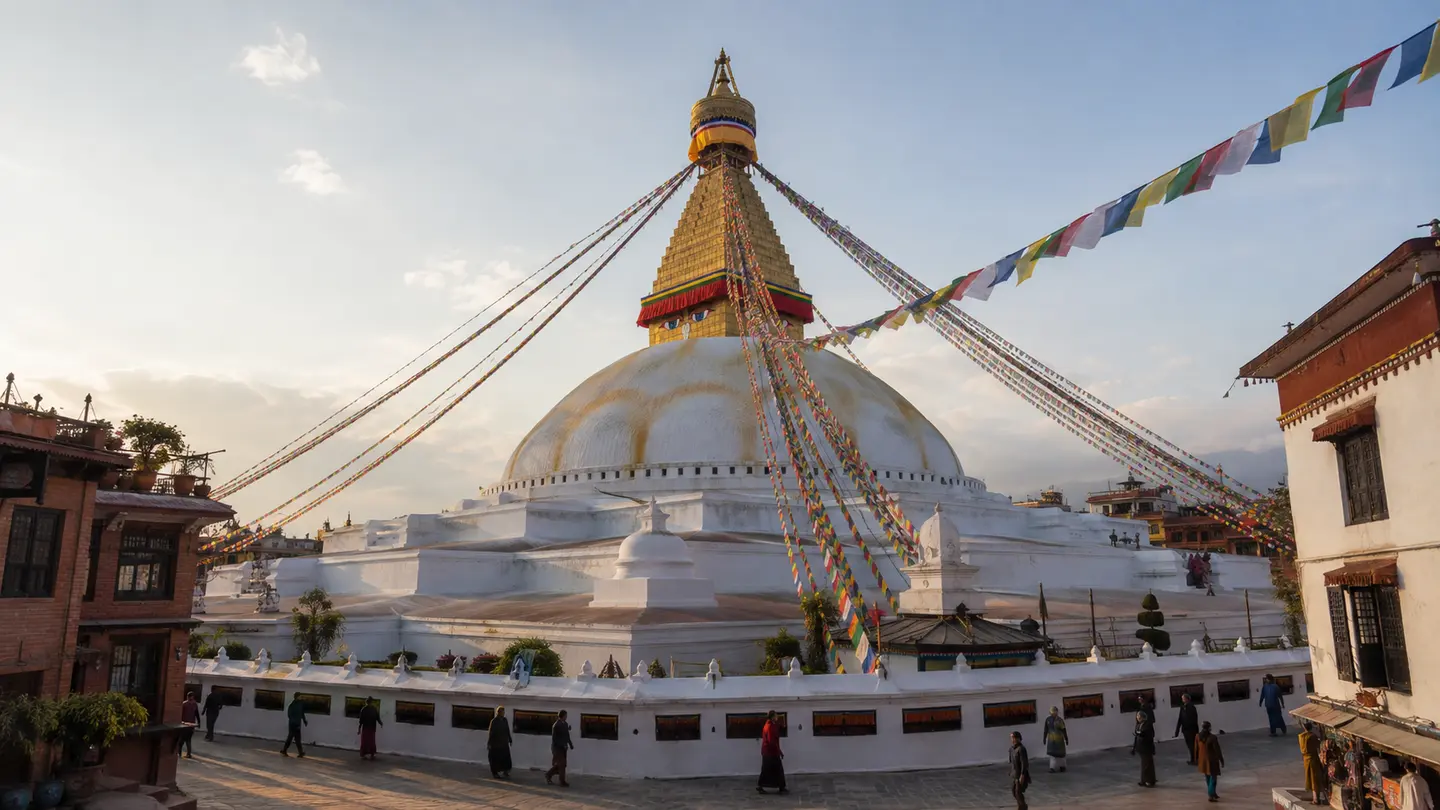
Boudhanath is one of the largest stūpas in Nepal and a major centre of Tibetan Buddhism, surrounded by monasteries, shops and a busy circular square.
To be retained
- Grand stūpa of Kathmandu Valley
- Tibetan Buddhism Centre
- Kora daily very alive
- Restored after the 2015 earthquake
History and context
The precise dating of the monument is discussed, but the stūpa is an ancient landmark of the valley. The installation of Tibetan communities in the 20th century strengthens its international role. After the earthquake of 2015, the monument is restored and consecrated again.
Why is this place spiritual?
Its structure can be read as a mandala and a representation of the Buddhist path. Pilgrims and inhabitants carry out the kora, turn the mills and recite mantras, especially during the transition hours of the day.
What the landscape makes you feel
The square allows to observe the stūpa at different heights and distances. The continuous movement around the monument, punctuated with prosternations and sounds, gives space a rhythmic quality more than absolute silence.
Energy, atmosphere and feelings
The feeling of calm within a yet animated place can be linked to circular walking, repetition and central visual landmark. Traditions will speak of merit, blessing or presence rather than a universal energy mechanism.
Discover with respect
- Perform the kora clockwise.
- Leave space for prostrations.
- Avoid treating flags or mills as simple decorations.
Sources