Introduction
Understanding the place
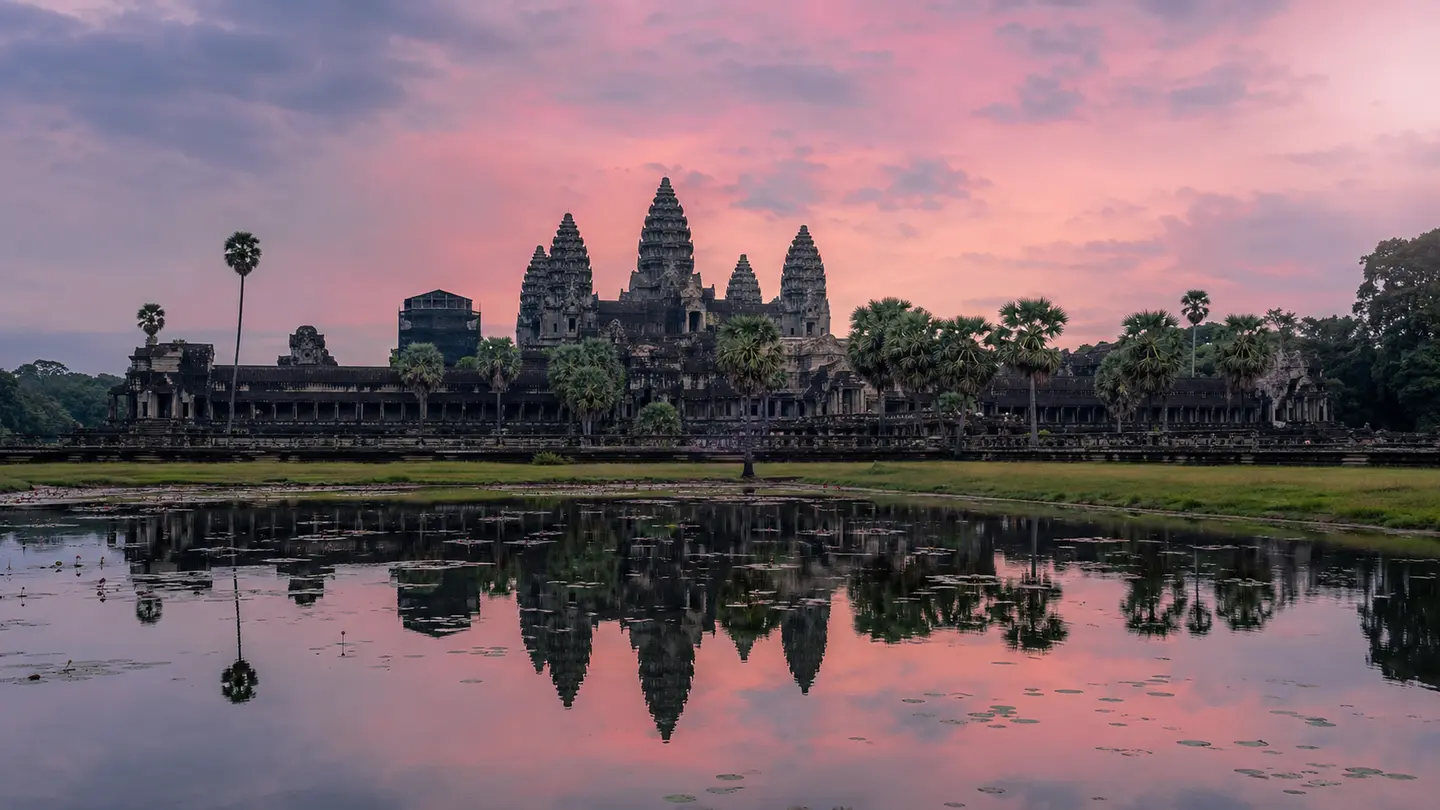
Angkor Wat is the most famous monument of the ancient Khmer capital. Originally conceived as a Hindu temple dedicated to Vishnu, it is then integrated into Buddhist life.
To be retained
- Khmer Temple of the 12th century
- Hindu origin Vishnuite
- Buddhist continuity
- Representation of Mount Meru
History and context
King Suryavarman II built the temple in the early twelfth century. Its enclosure, galleries of bas-reliefs and five towers represent a royal and religious cosmology. Angkor Wat was never completely abandoned and had long-lasting Buddhist uses.
Why is this place spiritual?
The mountain temple evokes Mount Meru in the centre of the Hindu cosmos. The bas-reliefs stage epic and royal history. Later Buddhist practices add new layers of meaning without erasing the Vishnuite origin.
What the landscape makes you feel
The roadway crosses the moat and gradually reveals the towers. Sunrise attracts large crowds; other hours allow to better observe the galleries and the spatial organization.
Energy, atmosphere and feelings
Symmetry, repetition and long approach can create a feeling of power. The so-called energy maps must remain secondary to Khmer history and Hindu and Buddhist traditions.
Discover with respect
- Wear a shoulder and knee covering outfit.
- Do not touch bas-reliefs.
- Recognize Buddhist continuity and the living Cambodian context.
Sources