Introduction
Understanding the place
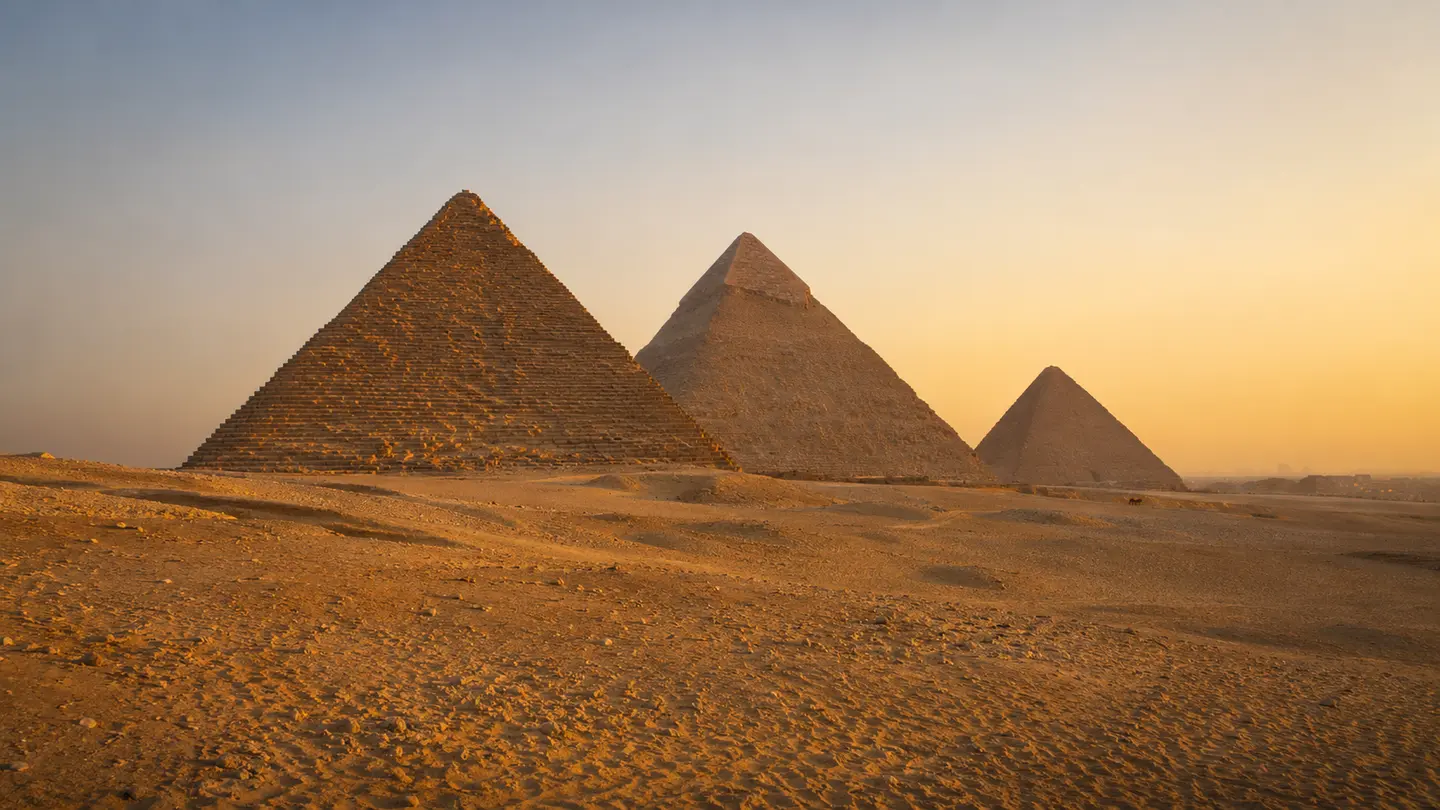
The pyramids of Kheops, Khéphren and Mykerinos dominate a vast necropolis of the Ancient Egyptian Empire, designed around royalty, death and cosmic continuity.
To be retained
- Necropolis of the Old Empire
- Funeral complexes and non-sheltered monuments
- The link between royalty and cosmic order
- Undemonstrated energy theories
History and context
The Giza plateau is mainly built during the Fourth Dynasty, about the middle of the third millennium BCEE. Pyramids are not isolated monuments: temples, carriageways, dignitary tombs, workers' habitats and Grand Sphinx make up an organized funeral landscape.
Why is this place spiritual?
In ancient Egyptian religion, the king's survival and the maintenance of cosmic order are closely linked. The form, orientation and rituals of pyramidal complexes participate in this conception. Modern interpretations should not replace archaeological and textual sources.
What the landscape makes you feel
The scale of monuments changes the landmarks, especially when one observes the relationship between the stones, desert and the Nile valley. Imagineing the original smooth coverings helps to understand how different the ancient appearance was from the present ruins.
Energy, atmosphere and feelings
The stories of energy power, lost technologies or extraordinary pyramidal properties are popular but not scientifically established. Fascination can be recognized without confusing speculative hypotheses with Egyptological research.
Discover with respect
- Respect graves and prohibited areas.
- Refuse the accounts that erase the work of the ancient Egyptians.
- Distinguish religious symbolism and modern pseudo-sciences.
Sources