Introduction
Understanding the place
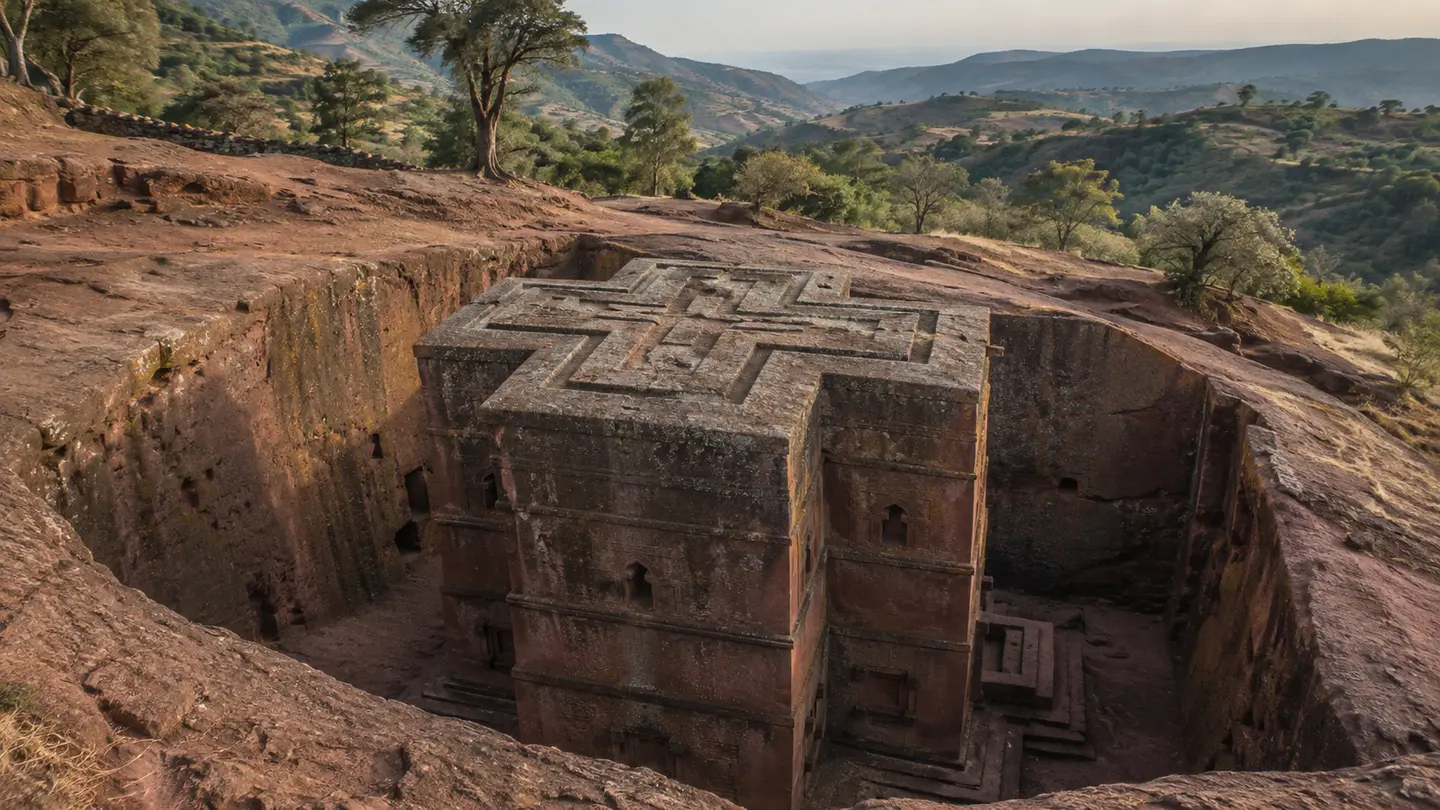
Eleven medieval churches carved from the rock form a still active pilgrimage to the Ethiopian Orthodox Church in Lalibela.
To be retained
- Eleven churches cut out of rock
- Orthodox pilgrimage still alive
- Jerusalem inspired topography
- Excavation architecture
History and context
Traditionally associated with King Lalibela's reign, the complex is carved and carved into the volcanic tuft in the 12th and 13th centuries, with subsequent evolutions. Tranched, passages and courtyards connect several groups of churches and compose a symbolic topography.
Why is this place spiritual?
Lalibela is often presented as a new Jerusalem, shaped to offer a local pilgrimage centre. Liturgy, processions, songs and the presence of priests and pilgrims give monuments a rare continuity of use.
What the landscape makes you feel
The discovery is made by descending into the rock rather than by raising first the eyes towards a facade. The famous Bete Giyorgis, in the shape of a cross, reveals particularly this negative architecture where the void was excavated around the building.
Energy, atmosphere and feelings
The feeling of a "living" place is supported by religious continuity, acoustics, contact of the rock and ritual gestures. It does not require the hypothesis of a special natural energy.
Discover with respect
- Consider churches as places of worship before being monuments.
- Ask before photographing people or ceremonies.
- Avoid the reductive narratives of "unable construction."
Sources