Introduction
Understanding the place
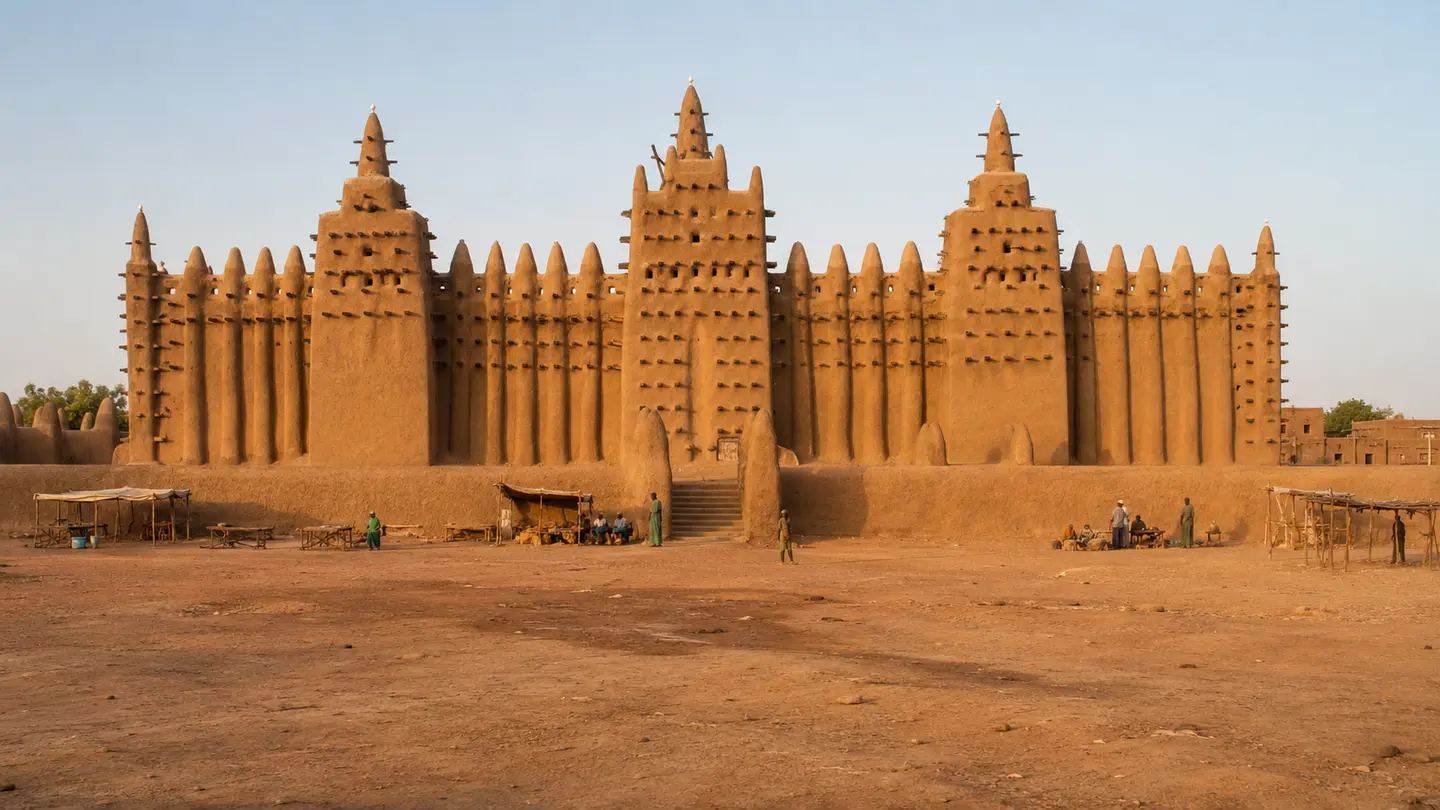
The Great Mosque of Djenné is an emblem of the Sudanese-Sahelian architecture. Its regular maintenance mobilizes the community and links religious practice, know-how and urban life.
To be retained
- Monumental architecture on earth
- Active mosque
- Annual Community interview
- Heritage related to a historic city
History and context
Several mosques have been built on the site. The current building, completed in 1907, takes over and transforms local forms into a banco, raw earth material. The visible facades, towers and wood pieces are both structural, aesthetic and useful during repairs.
Why is this place spiritual?
The mosque is used primarily for Muslim prayer and for the religious life of Jenné. The annual collective crepasing expresses a shared responsibility: conservation is not separated from social participation.
What the landscape makes you feel
The ochre mass transforms with light and seems to prolong the ground of the city. The outside is the main observation space for non-Muslims, with interior access subject to local rules.
Energy, atmosphere and feelings
The often felt sense of unity is based on the scale of the building, the living material and the community narrative. It is more accurate to speak of the atmosphere and social significance than objectively measured energy.
Discover with respect
- Respect locally defined access rules.
- Do not photograph the faithful without permission.
- Recognize that heritage depends on the work and choices of the community.
Sources