Introduction
Understanding the place
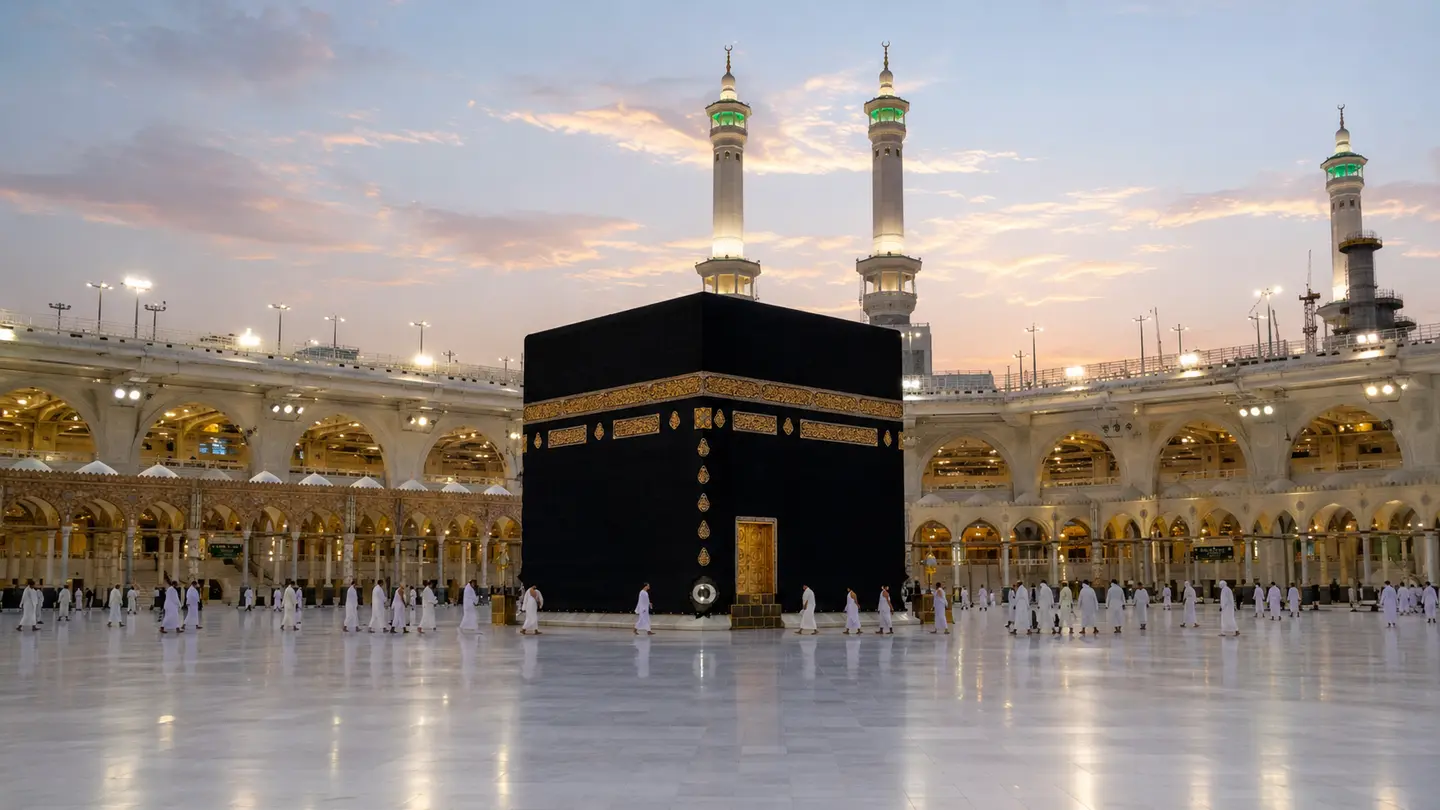
Mecca is home to the Kaaba, towards which Muslims turn for prayer, and is the destination of Hajj, one of the five pillars of Islam for those who can accomplish it.
To be retained
- Muslim Prayer Directorate
- Destination of hajj and
- Abrahamic memory related rituals
- Access for Muslims only
History and context
A commercial city and sanctuary of Western Arabia, Mecca occupies a central place in the life of the Prophet Muhammad and the birth of Islam in the seventh century. The Great Mosque has been enlarged on numerous occasions to accommodate an increasing number of pilgrims.
Why is this place spiritual?
The Hajj brings together precise rites linked to Abraham, Hagar, Ishmael and the Prophet Muhammad in Islamic tradition. The d`ihram garments and common movements ideally express humility, equality and orientation towards God. The 的umra can be accomplished outside the Hajj period.
What the landscape makes you feel
The tawaf around the Kaaba, the collective prayer and the presence of Muslims from all over the world give the place a unique density. The holy city is forbidden to non-Muslims; an encyclopedic presentation must respect this rule without claiming to an experience of universal visitation.
Energy, atmosphere and feelings
In Islamic vocabulary, blessing and sacrality are more relevant than the contemporary notion of energy. Orabel avoids imposing on Mecca an esoteric grid outside tradition.
Discover with respect
- Recognize that access is restricted to Muslims.
- Present the rites with their own terms and meanings.
- Avoid any disrespectful or spectacular illustration of the pilgrimage.
Sources