Introduction
Understanding the place
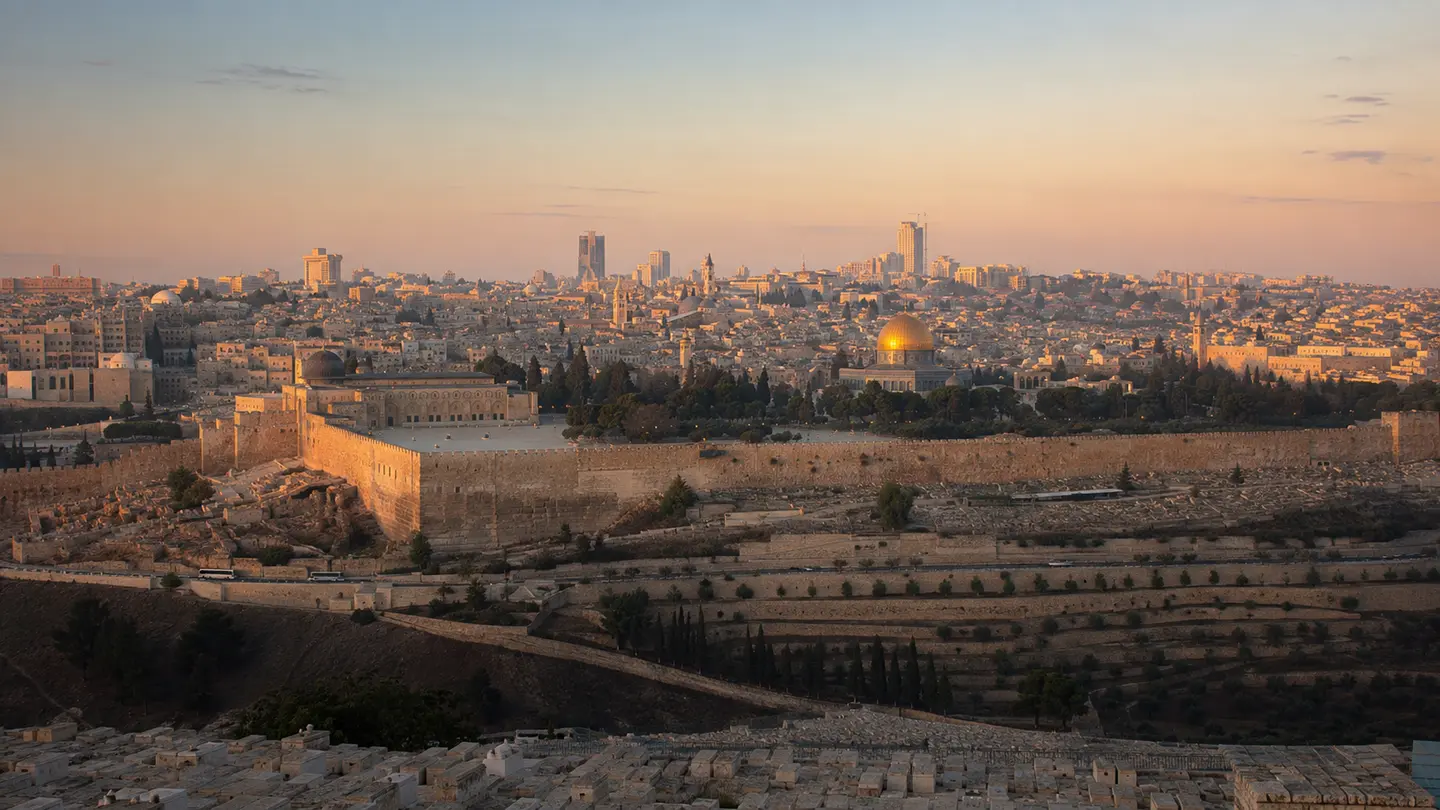
Jerusalem concentrates major places of Judaism, Christianity and Islam. Its spiritual strength is inseparable from a complex political, human and memorial history.
To be retained
- Holy city for three religions
- Neighboring places but distinct meanings
- Political history inextricably linked to the sacred
- Observance and accuracy
History and context
The city has experienced many sovereignty, destruction, reconstruction and displacements of population. The Western Wall, the mosques' esplanade with the Dome of the Rock and al-Aqsa, as well as the Holy Sepulchre belong to separate but spatially related stories.
Why is this place spiritual?
For Judaism, Jerusalem is linked to the Temple and the center of prayer. For Christians, it is the theatre of the Passion and resurrection of Jesus. For Islam, al-Quds is associated with the night journey and is a major holy place. These meanings do not merge into a single spirituality.
What the landscape makes you feel
A few hundred meters pass between languages, calendars, sounds and different practices. The intensity comes from faith as much as from the density of history and contemporary tensions.
Energy, atmosphere and feelings
Visitors can speak of an incomparable energy. Orabel presents it as a feeling shaped by memory, proximity to shrines and emotions, without using it to simplify political or religious realities.
Discover with respect
- Use precise terminology and recognize competing sensitivities.
- Respect the rules of each sanctuary.
- Do not romantize tensions or clear the inhabitants.
Sources