Introduction
Understanding the place
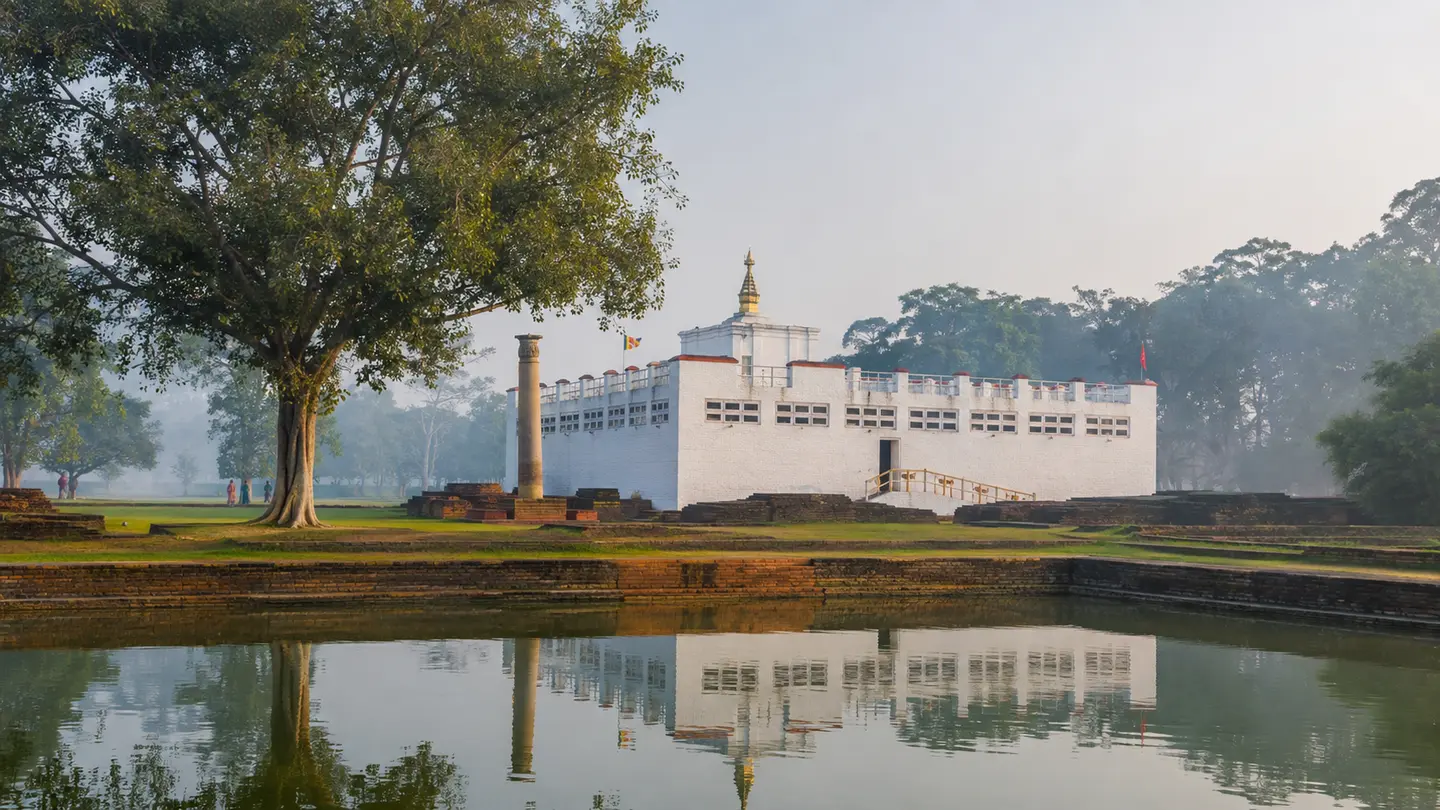
Lumbini is identified by the Buddhist tradition as the birthplace of Siddhartha Gautama. The pillar of Emperor Ashoka is a major historical landmark of the pilgrimage.
To be retained
- Traditional place of birth of Buddha
- Pillar d
- Sacred Garden and Maya Devi Temple
- Monasteries of many schools and nations
History and context
The pillar erected by Ashoka in the third century BCEE. bears an inscription combining the place of the birth of the Buddha. The remains of the Maya Devi temple show ancient phases, while a vast international monastic zone developed in contemporary times.
Why is this place spiritual?
Lumbini is one of the four great places related to the life of Buddha. He invites meditating on the birth, the potential awakening and the historical humanity of the one who will become Buddha.
What the landscape makes you feel
The sacred garden, pond and temple create a sober centre, contrasting with the architectural diversity of monasteries built by different countries. The passage from one to the other shows the plurality of world Buddhism.
Energy, atmosphere and feelings
The calm of the garden can be experienced as a particular quality. It is better to speak of contemplation, memory and practice rather than asserting a birth-related energy.
Discover with respect
- Keep silence in the sacred garden.
- Respect the rules of the different monasteries.
- Distinguish religious tradition and archaeological evidence available.
Sources