Introduction
Understanding the place
Karbala is at the heart of the Shiite memory of the martyrdom of l'imam Hussein, grandson of the prophet Muhammad, killed with his companions in 680.
To be retained
- Place of the martyrdom of Imam Hussein
- Major Centre of Shiism
- Ashura and Arbain
- Justice and resistance as central themes
History and context
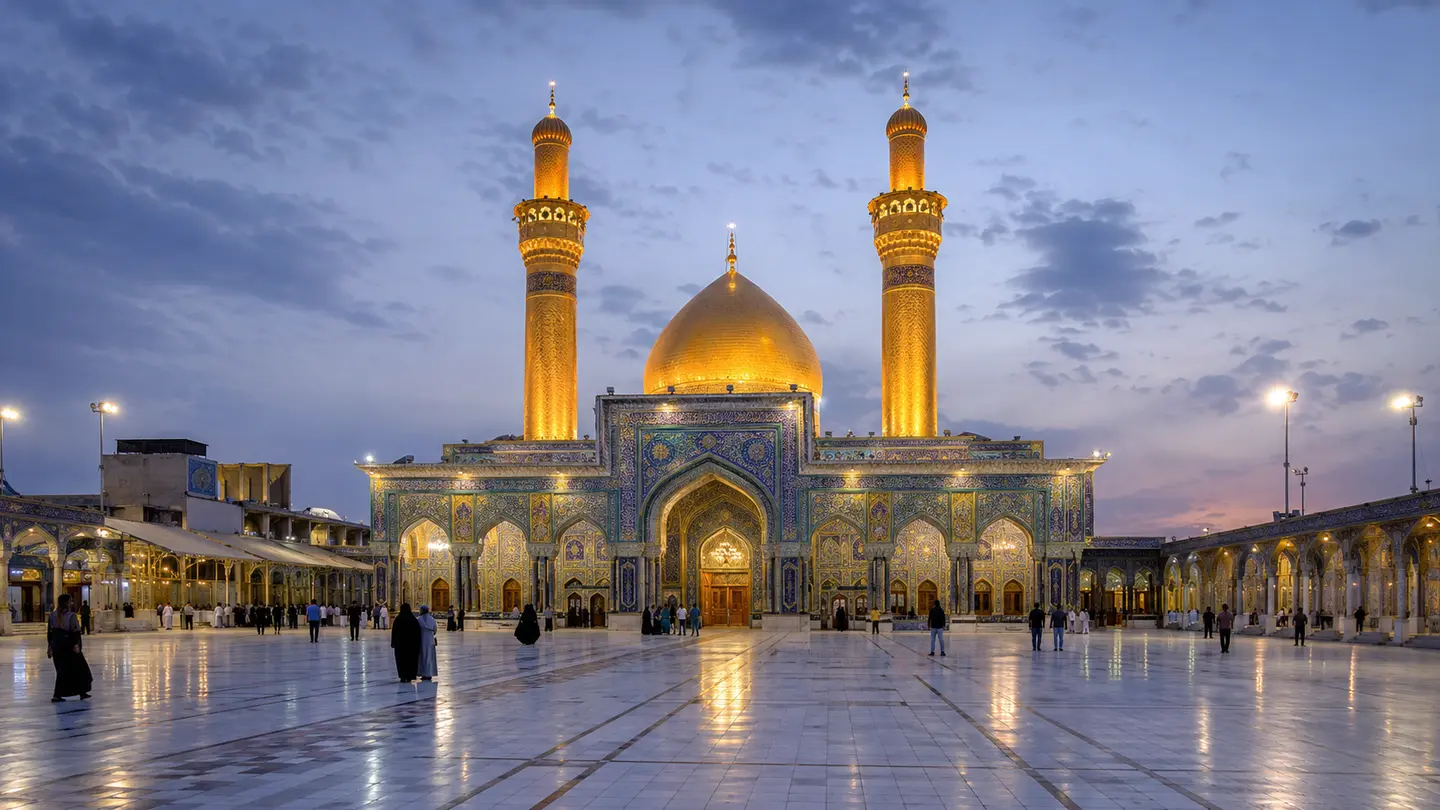
The battle of Karbala contrasts in 680 the small group of Hussein ibn Ali with the forces of the Umayyad Caliphate. His death becomes a founding event of Shiite consciousness. Shrines are raised around the tombs of Hussein and d'al-Abbas, then enlarged through the centuries.
Why is this place spiritual?
Karbala symbolizes faithfulness to justice in the face of oppression. The commemorations of the Ashura and the pilgrimage of Arbain link mourning, narrative, hospitality and moral commitment. The ritual forms differ according to the regions and sensitivities.
What the landscape makes you feel
The golden domes and crowds of pilgrims give spectacular visibility to the site, but the most significant gestures are often listening to the stories, prayer and services offered free of charge along the roads.
Energy, atmosphere and feelings
Karbala's intensity is a matter of memory, devotion and emotional communion. Using only the energy vocabulary would impoverish the ethical and historical reach of the site.
Discover with respect
- Respect the ritual mourning and the rules of the shrines.
- Do not reduce the Shiism to its most visible commemorations.
- Avoid intrusive images of intimate practices.
Sources