Introduction
Understanding the place
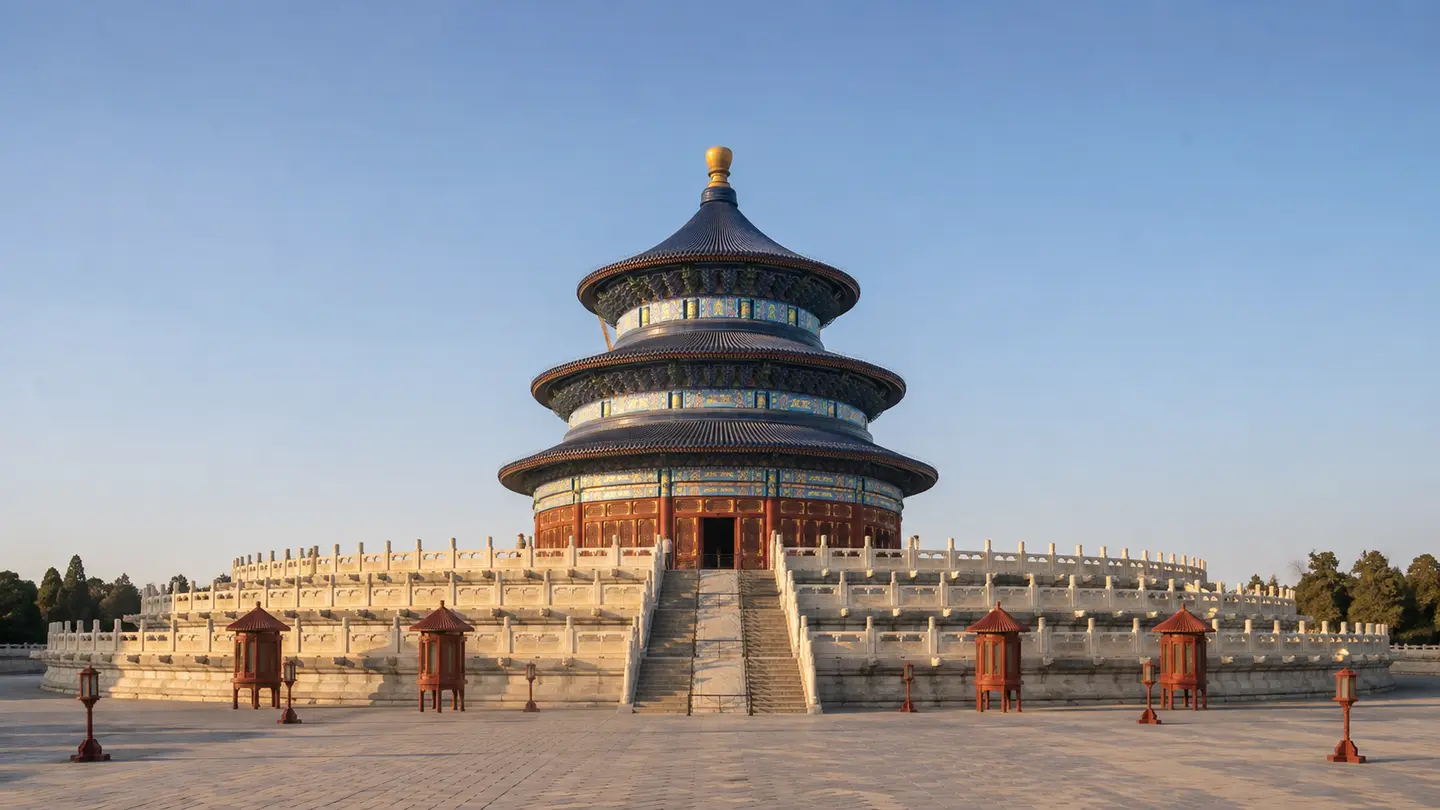
The Temple of Heaven is a complex where Emperors Ming and Qing performed rites intended to maintain harmony between heaven, earth, sovereignty and agricultural cycles.
To be retained
- Ming and Qing Emperors' ritual complex
- Cosmology translated by architecture
- Rites for harvest
- Social park living today
History and context
Built from the beginning of the 15th century and then enlarged and transformed, the complex includes the Hall of Prayer for Good Harvests, the Imperial Celestial Vault and the Altar of the Circular Terten. Imperial rites cease after the fall of the Qing Dynasty.
Why is this place spiritual?
The sovereign, the Son of Heaven, was to perform precise ceremonies for the good of the kingdom. Architecture translates Chinese cosmological correspondences, but the site cannot be reduced to Taoism alone: state religion, classics, cosmology and politics articulate there.
What the landscape makes you feel
The axes, the enclosures and the terraces lead the look towards circular buildings laid on geometrical bases. The park is now also a social space where the inhabitants practice music, exercises and games.
Energy, atmosphere and feelings
The interpretations of feng shui and qì must be repositioned in Chinese history. Geometric harmony is observable; the idea of a measurable energy flow is another statement.
Discover with respect
- Do not assign each detail to a unique esoteric code.
- Respect the busy heritage spaces.
- Distinguish imperial historical rites and current popular practices.
Sources