Introduction
Understanding the place
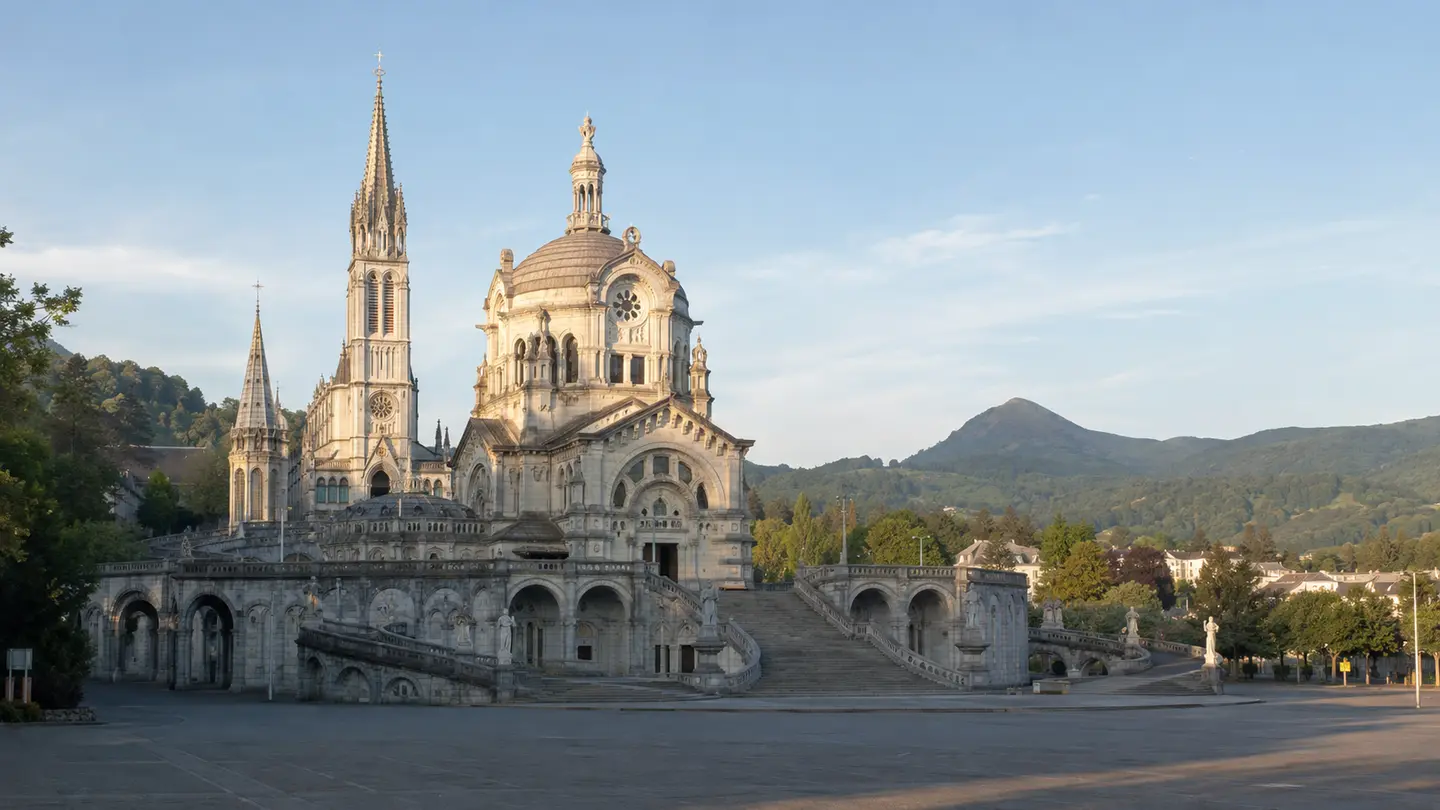
Lourdes developed around the Marian apparitions reported by Bernadette Soubirous in 1858 and today welcomes pilgrims from all over the world, including sick or disabled people.
To be retained
- Grand Marian pilgrimage contemporary
- Central place for fragile people
- Water and light as symbols
- Faith and Medicine clearly distinguished
History and context
Between February and July 1858, Bernadette Soubirous stated that she had seen a figure which she later identified with the Virgin Mary in the cave of Massabielle. The Catholic Church recognized the apparitions in 1862. Several basilicas, procession spaces and reception structures were gradually built around the cave.
Why is this place spiritual?
The sanctuary emphasizes the prayer, hope, service and dignity of fragile people. Lourdes water occupies an important place in devotion, without being presented by the sanctuary as a medicine. The healing recognized by the Church is carried out through a separate procedure of ordinary medical evaluation.
What the landscape makes you feel
The cave, candles, processions and international diversity of pilgrims give the place a singular atmosphere. The experience is often less that of an isolated monument than of a temporary community organized around attention to others.
Energy, atmosphere and feelings
The sensations of appeasement or intensity experienced in Lourdes can be profound, they can be due to faith, ritual, collective emotion and the context of pilgrimage; they do not prove measurable curative energy.
Discover with respect
- Respect the privacy of sick people and do not photograph them without agreement.
- Never substitute a spiritual approach for care.
- Observe the silence requested from the cave.
Sources