Introduction
Understanding the place
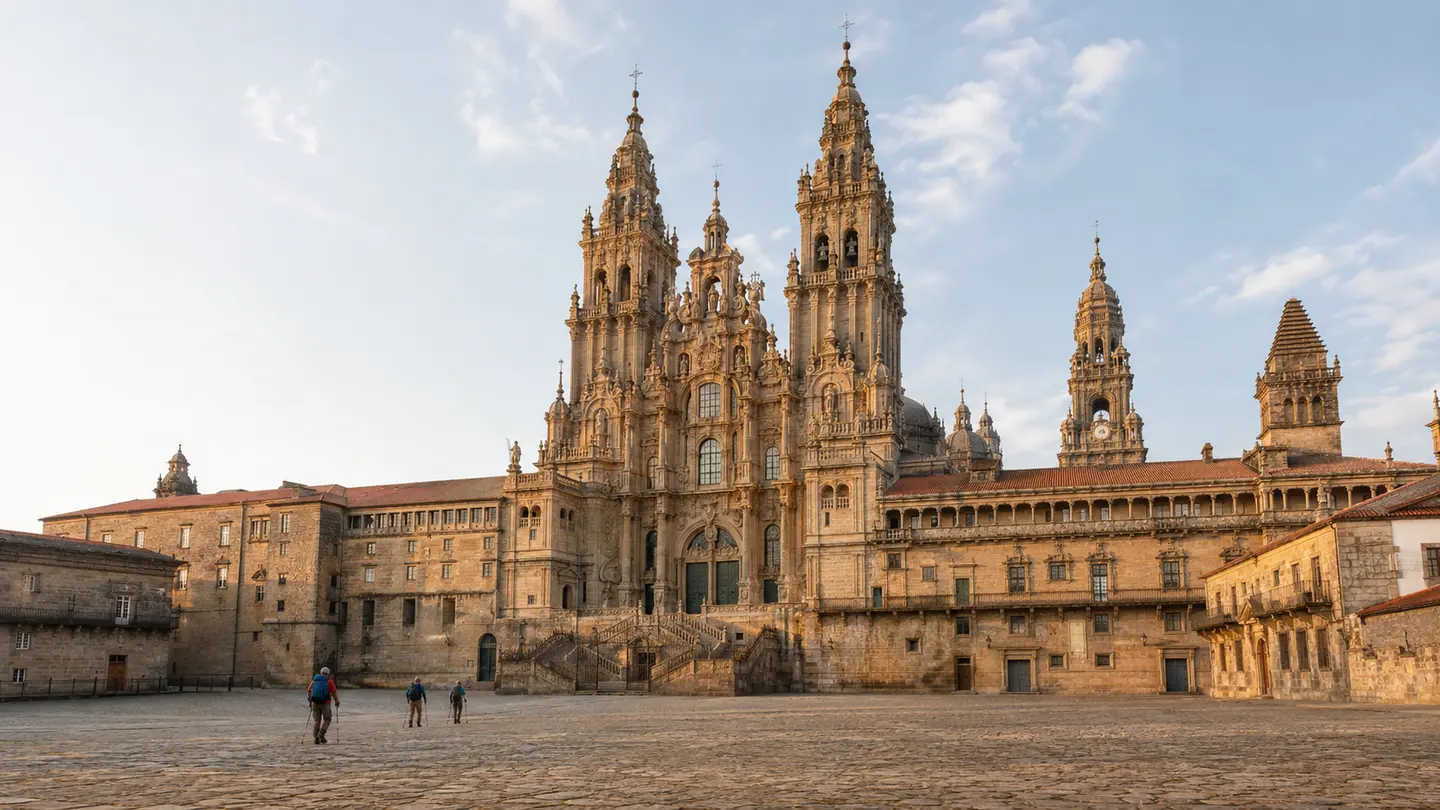
The Cathedral of Compostela is the emblematic term of the paths of Santiago, a European pilgrimage network associated with the tradition of the tomb of the Apostle James.
To be retained
- A network of roads more than one place
- Christian Pilgrimage with today's multiple motivations
- Walking, Hospitality and Transformation
- Symbolic arrival at the cathedral
History and context
The supposed discovery of an apostolic tomb in the ninth century promotes the development of a sanctuary, then of a city of pilgrimage. The Romanesque cathedral, enriched over the centuries, and the roads that converge there structure religious, cultural and economic exchanges on a European scale.
Why is this place spiritual?
The Jacquarian path combines displacement, effort, recounting and hospitality. It remains Christian in its origin and its liturgy, but today welcomes very diverse motivations: faith, mourning, transition of life, quest for meaning, physical challenge or cultural discovery.
What the landscape makes you feel
The arrival on the Obradoiro Square is made sense after the slow walking. Meetings, fatigue and repetition of daily gestures are often the heart of the journey. The destination temporarily gathers very different personal stories.
Energy, atmosphere and feelings
What some call "energy of the path" can be understood as the cumulative effect of landscape, effort, expectations, heritage and solidarity between walkers. This reading respects the experience without assigning to it an unproven physical cause.
Discover with respect
- Do not reduce pilgrimage to a sporting performance.
- Respect the inhabitants, other walkers and places of worship.
- Prepare your journey and limit its impact on the routes you have attended.
Sources