Introduction
Understanding the place
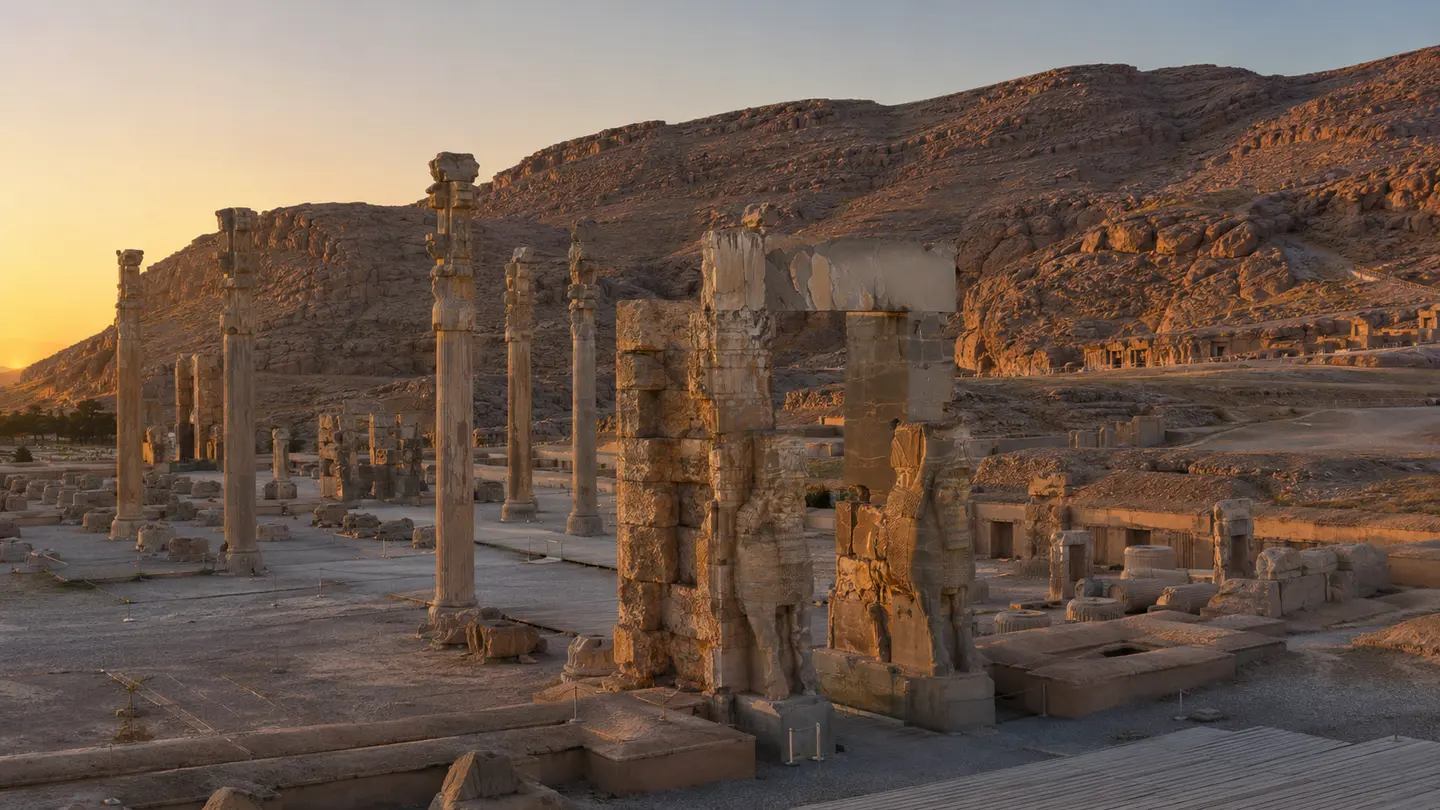
Persepolis was a royal center of the Achenimian Empire. Its terraces, palaces and reliefs show a political vision of the world where many peoples appear in an orderly composition.
To be retained
- Achenid ceremonial capital
- Reliefs of imperial delegations
- Invocations to Ahura Mazda
- Exact religious function nuanced
History and context
Founded by Darius I around 518 BCEE. and developed by its successors, the city is built on a vast artificial terrace, which is burned during the conquest of Alexander in 330 BCEE., but its reliefs and inscriptions retain exceptional documentation.
Why is this place spiritual?
The site is not a Zoroastrian temple in the simple sense. The Achemenid kingship invokes Ahura Mazda in its inscriptions, while the ceremonial function of Persepolis remains discussed. Links to Iranian festivals have been proposed, without allowing to identify each space to a specific rite.
What the landscape makes you feel
The ascent by the monumental staircase and the reading of the carved delegations produce a meeting with a policy of image. The mountain behind the terrace and the nearby royal tombs expand the site beyond the palaces.
Energy, atmosphere and feelings
Cultural pride and historical depth can create a strong feeling. However, it is appropriate not to turn Persepolis into a vortex or a secret temple without proof.
Discover with respect
- Avoid d-assimilating all ancient Persia to one form of Zoroastrianism.
- Do not touch or climb the reliefs.
- Present the ritual functions discussed with caution.
Sources