Introduction
Understanding the place
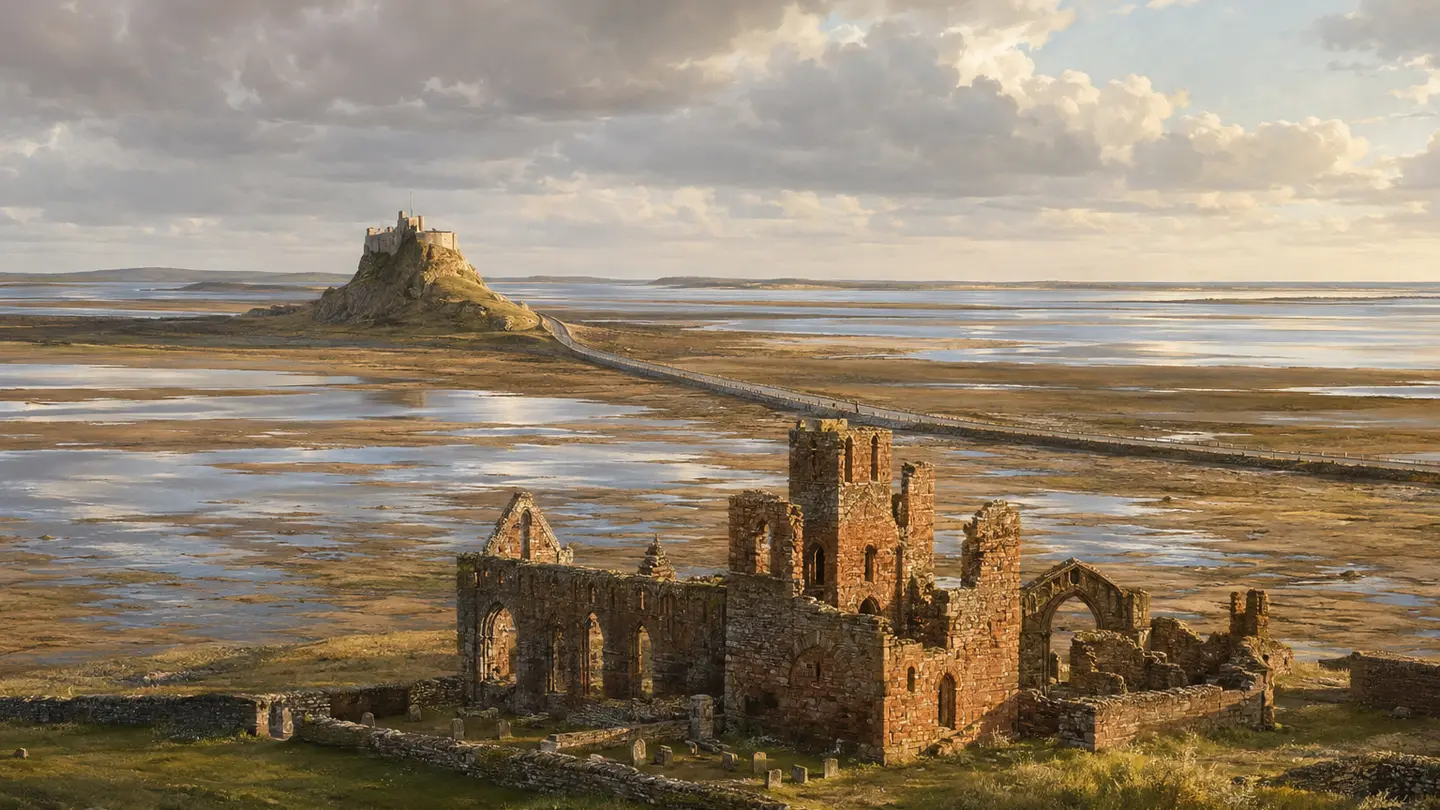
Lindisfarne is an island accessible at low tide, associated with Saints Aidan and Cuthbert, the Gospels of Lindisfarne and the history of Anglo-Saxon Christianity.
To be retained
- Monastery founded in 635
- Saints Aidan and Cuthbert
- Island accessible according to tides
- Book and Mission Centre
History and context
Aidan founded a monastery in 635 at the invitation of King Oswald. The place became a major missionary and artistic centre. The Viking raid of 793 marked European memories; the community then left the island with the relics of Cuthbert. A Benedictine priory was established after the Norman conquest.
Why is this place spiritual?
The island embodies mission, study, prayer and withdrawal. The so-called "Christian Celtic" traditions are now highly appreciated, but this modern label simplifies various medieval churches.
What the landscape makes you feel
The passage through the roadway, subject to the tidal schedules, makes the dependence on the landscape feel. Ruins, dunes and sea sky create a special sobriety.
Energy, atmosphere and feelings
Temporary isolation and wind can produce a strong sense of threshold. This experience is due to tide, history and attention.
Discover with respect
- Consult the tidal schedules.
- Nuance the term Celtic Christianity.
- Respect the inhabitants, birds and prayer spaces.
Sources