Introduction
Understanding the place
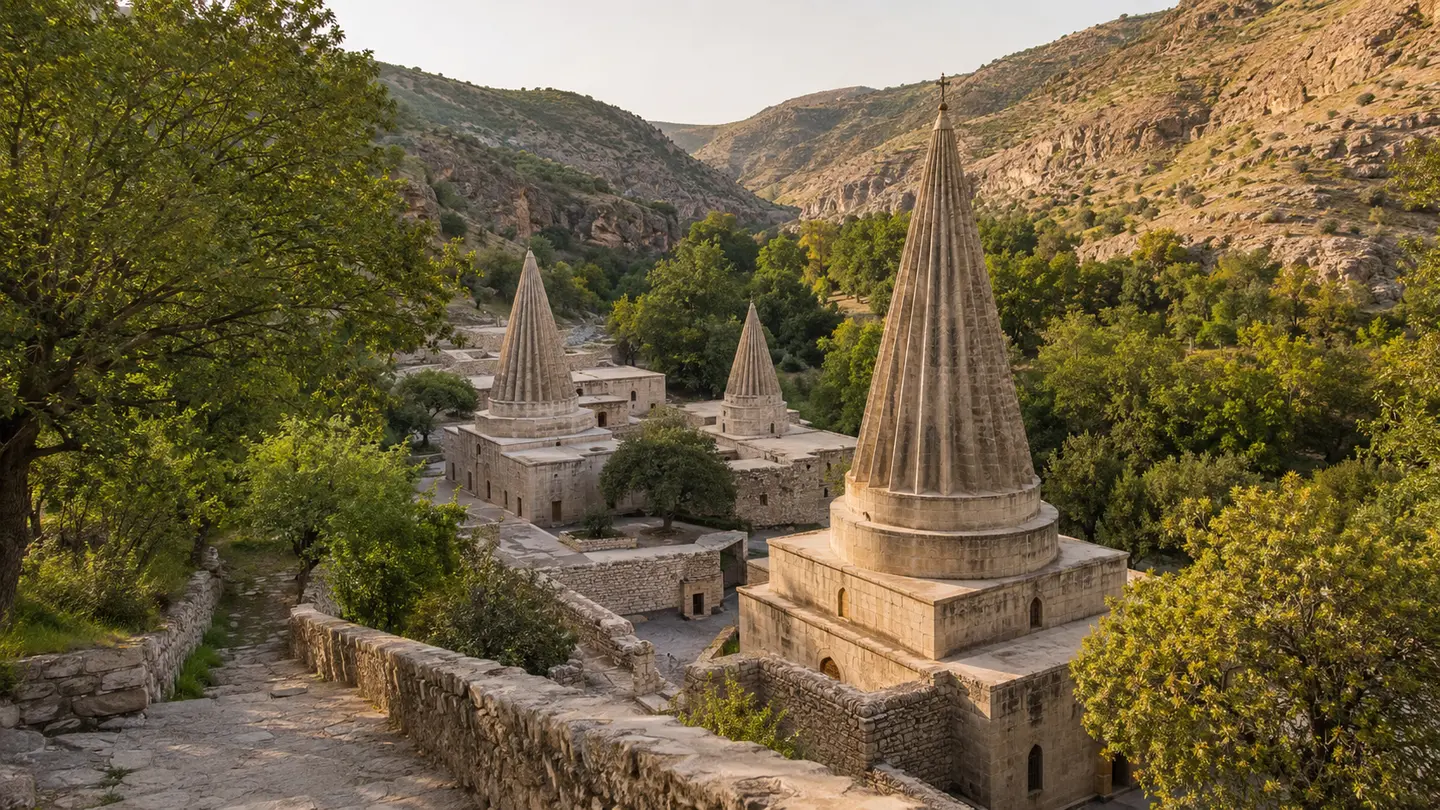
Lalish is the main sanctuary of Yezidism and the place of the tomb of Sheikh Adi. The Yezidi of the whole world have a deep spiritual connection with this valley.
To be retained
- Main sanctuary yezidi
- Shaykh Adi's Tomb
- Pilgrimage and Assembly Day
- Living place of a persecuted minority
History and context
The sanctuary develops around the tomb of Sheikh Adi ibn Musafir, a figure of the 12th century central in the historical formation of the Yezidian tradition. Temples with conical arrows, sources and ritual spaces make up a sacred landscape continuously maintained despite the persecutions suffered by the community.
Why is this place spiritual?
Lalish is a place of pilgrimage, baptism, offerings and gathering, especially during the feast of the Assembly. The land of the valley, its waters and its thresholds are the subject of precise practices that cannot be reduced to folklore.
What the landscape makes you feel
Visitors take off their shoes before entering the sacred valley and avoid walking on the thresholds. The fluted cones and tied fabrics create a strong visual identity, but listening to the guards remains more important than looking for images.
Energy, atmosphere and feelings
The sacrality of Lalish belongs to Yezidism and its collective memory. To call it a simple "energy place" could erase a living minority tradition and the historical violence that it has passed through.
Discover with respect
- Remove your shoes and follow the indicated uses.
- Do not walk on the thresholds.
- Avoid old and offensive confusions about Yezidian beliefs.
Sources