Introduction
Understanding the place
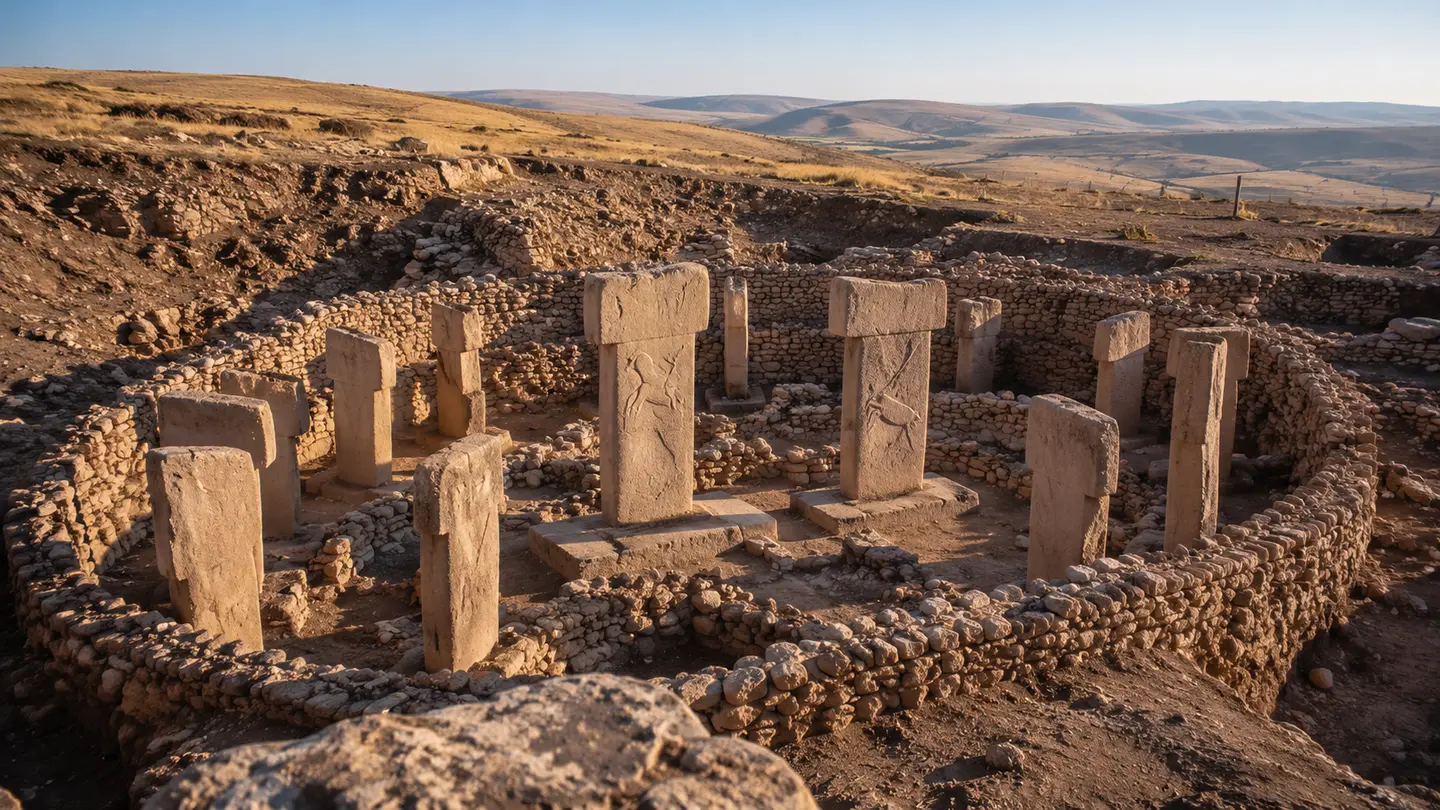
Göbekli Tepe gathers monumental stone enclosures built by hunter-gatherers communities at the beginning of Neolithic, with large T-pillars and a rich carved bestiary.
To be retained
- Monumentality of the early Neolithic
- Anthropmorphic T-pillars
- Probable but discussed ritual function
- No need for fantastic theory
History and context
The site is used mainly between about 9600 and 8200 BCEE. Its circular enclosures, regularly modified and filled, show that collective monumentality precedes or accompanies the beginnings of agriculture in the region.
Why is this place spiritual?
The buildings are often referred to as shrines, but their exact function remains under discussion. Rituals, banquets, memory of the dead and affirmation of groups were able to articulate it. No text can identify a specific religion.
What the landscape makes you feel
The anthropomorphic pillars, carved animals and dizzying age of the site produce a strong sense of proximity to a world that is still very poorly known. Modern cover now protects the remains.
Energy, atmosphere and feelings
Göbekli Tepe has generated many speculations about lost civilizations. Archaeological data are already extraordinary without resorting to unknown energies or extraterrestrial origin.
Discover with respect
- Present functions as assumptions.
- Refuse pseudo-archaeological accounts that distort research.
- Respect extremely fragile structures.
Sources