Introduction
Understanding the place
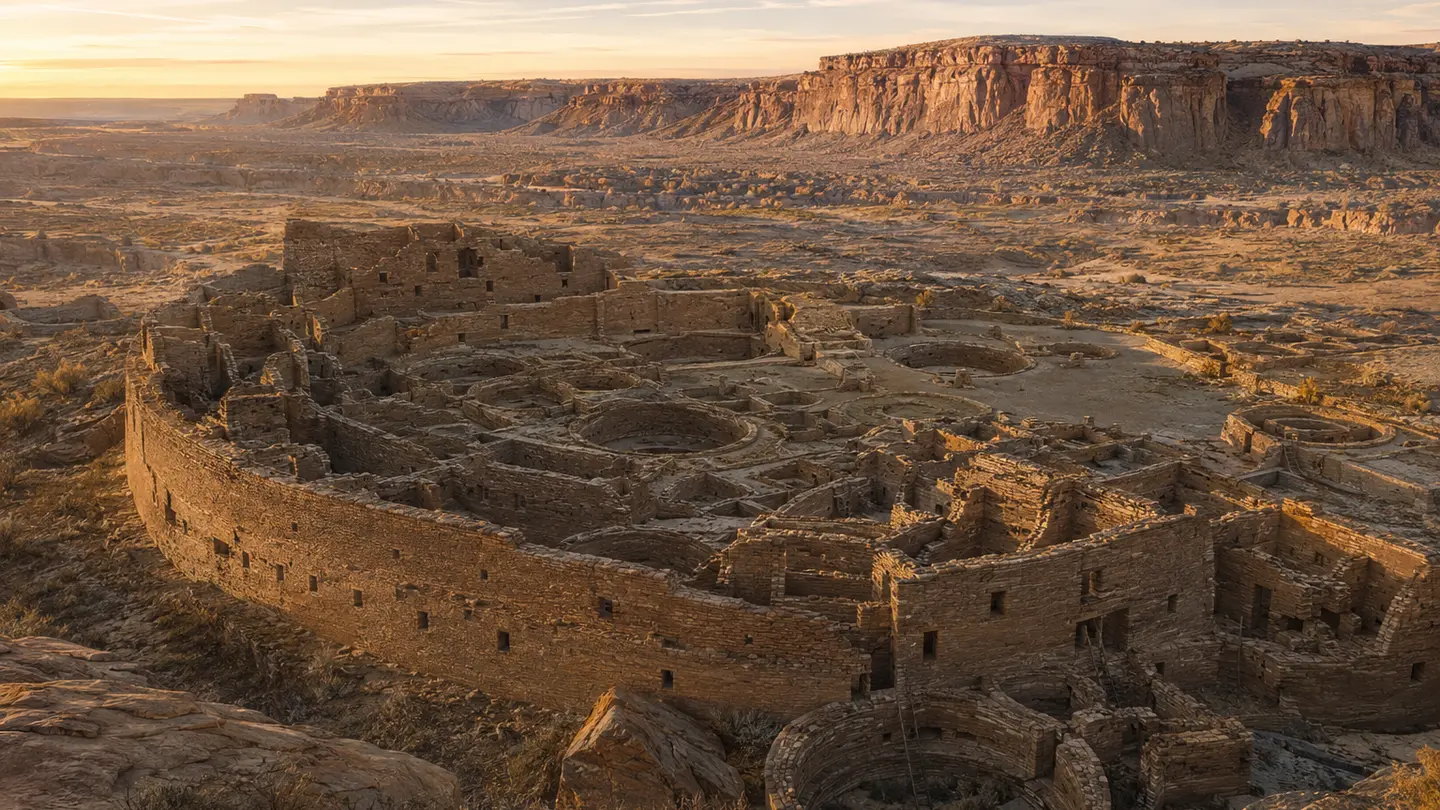
Chaco Canyon preserves large houses, kivas, roads and landscape observations related to the ancestors of contemporary Pueblos peoples.
To be retained
- Monumental architecture pueblo ancestrale
- Extended regional network
- Relations with the sky and the landscape
- Descendant peoples still present
History and context
Between 850 and 1250, communities built monumental ensembles like Pueblo Bonito, linked to a vast regional network. The causes of transformation and dispersion remain multiple. Pueblos, Hopi and Navajo peoples maintain with Chaco stories and relationships that go beyond archaeology.
Why is this place spiritual?
The kivas, orientations and roads indicate community and ceremonial dimensions, but their meanings must not be rebuilt without the authority of the descendants. "Abandon" does not mean cultural disappearance.
What the landscape makes you feel
The distance, the night sky and stone walls give a strong cosmic scale sensation. Desert conditions require preparation and modesty.
Energy, atmosphere and feelings
Solar and lunar alignments are studied; they do not establish an observatory in the modern sense or an energy plant. Astronomical knowledge was integrated into social and ritual life.
Discover with respect
- Do not enter closed areas or touch walls.
- Use the present for the Pueblos peoples.
- Follow authorized Aboriginal and archaeological interpretations.
Sources