Introduction
Understanding the place
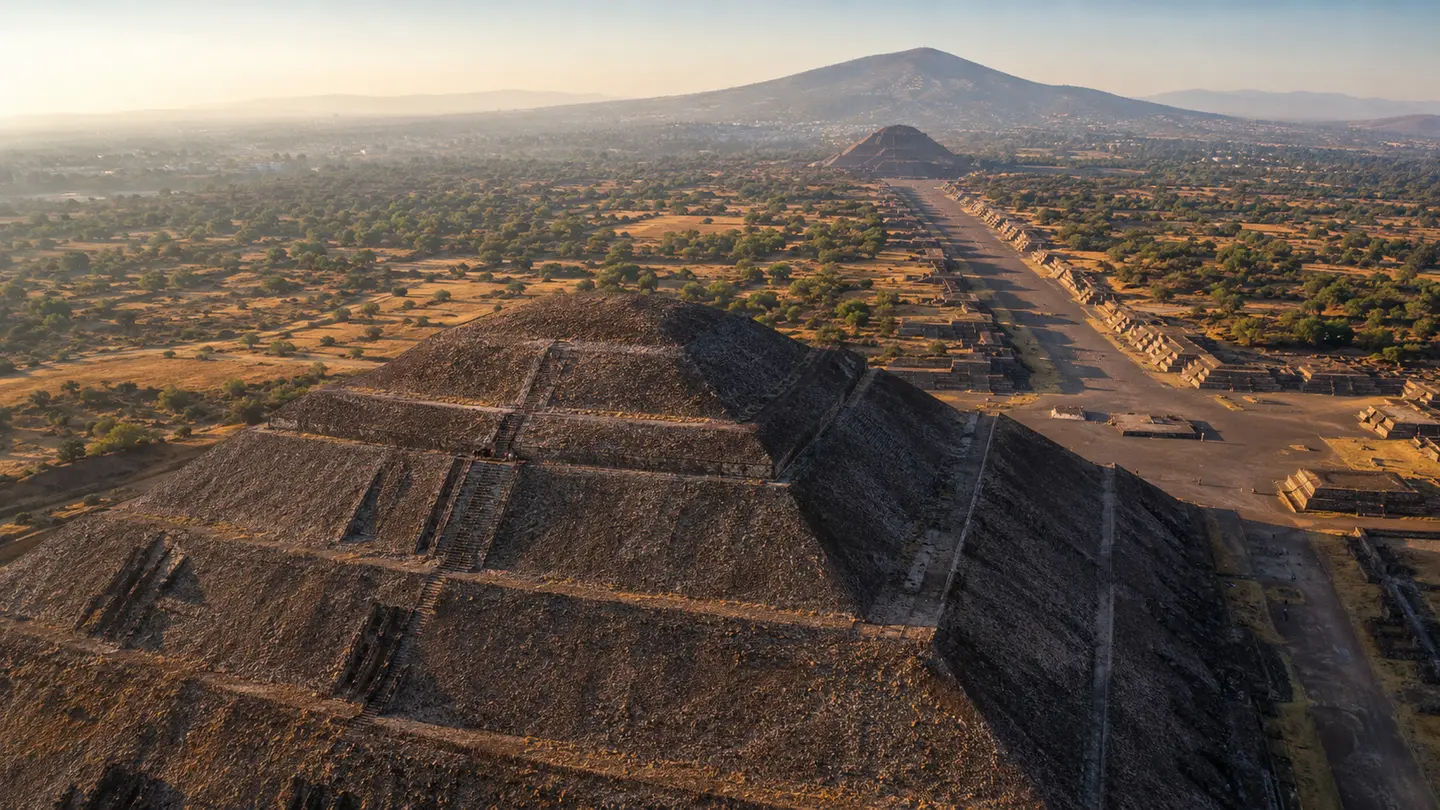
Teotihuacan was one of the largest cities in ancient America. Its pyramids, temples, residential ensembles and paintings show a complex urban and religious society.
To be retained
- Great metropolis of Mesoamerica
- Original names largely unknown
- Urbanism and closely related rituals
- Further appropriation by the Mexicans
History and context
The city flourished mainly between the 1st and 6th centuries, then suffered decline and destruction. Centuries later, the Mexicans gave it the name by which we know it and integrated it into their own sacred geography.
Why is this place spiritual?
The roadway of the Dead, the pyramids of the Sun and the Moon and the temple of the Feathered Snake structure a ritual landscape. Deities and rites are reconstructed by archaeology and iconography, as the original names remain largely unknown.
What the landscape makes you feel
The huge axis and geometric volumes make the urban scale perceptible. The original colors having largely disappeared, imagining painted facades avoids confusing the current bare stone with the old appearance.
Energy, atmosphere and feelings
Visitors often talk about energy at the top of the pyramids. Access and climbing are now limited for conservation; no particular physical energy is demonstrated.
Discover with respect
- Do not automatically call pyramids by their modern functions as if they were certain.
- Respect the prohibitions of climbing.
- Distinguish Teotihuacan from the Mexicans who discovered it later.
Sources