Introduction
Understanding the place
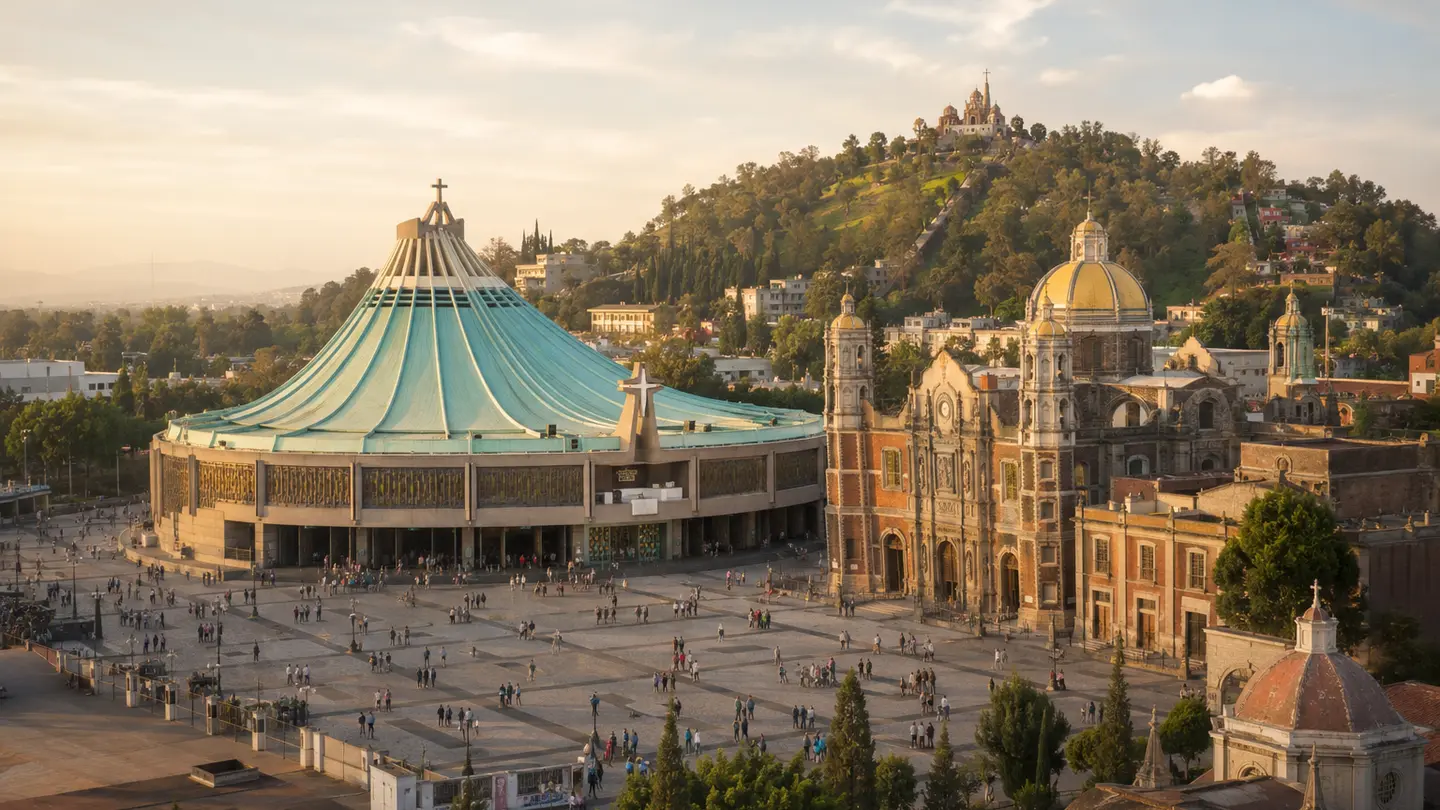
The shrine of Guadalupe, on the hill of Tepeyac, is one of the largest Catholic pilgrimages in the world and houses the image associated with the apparitions reported to Juan Diego in 1531.
To be retained
- Great Marian pilgrimage world
- Story of Juan Diego
- Religious and national symbol
- Old and new basilicas
History and context
The traditional account describes several apparitions of Mary to the Native Nahua Juan Diego. The written sources preserved are later and history is debated. Several churches follow each other; the modern basilica, opened in 1976, protects the image while the old one suffers from collapse.
Why is this place spiritual?
The Virgin of Guadalupe is understood as mother, protector and close presence of the peoples of Mexico. Her iconography has supported faith, national identity, social movements and decolonial readings, sometimes contradictory.
What the landscape makes you feel
The treadmill under the image, the crowd, the songs and the multiple chapels give an intensely collective experience. The hill allows to place the sanctuary in its urban landscape.
Energy, atmosphere and feelings
The pseudo-scientific statements on the eyes or the temperature of the image should be checked with caution. The cultural power of the image does not need fragile technical evidence.
Discover with respect
- Respect the crowd and pilgrims often come from afar.
- Distinguish tradition, history and pseudo-scientific affirmations.
- Recognize the complexity of Aboriginal and national readings.
Sources