Introduction
Understanding the place
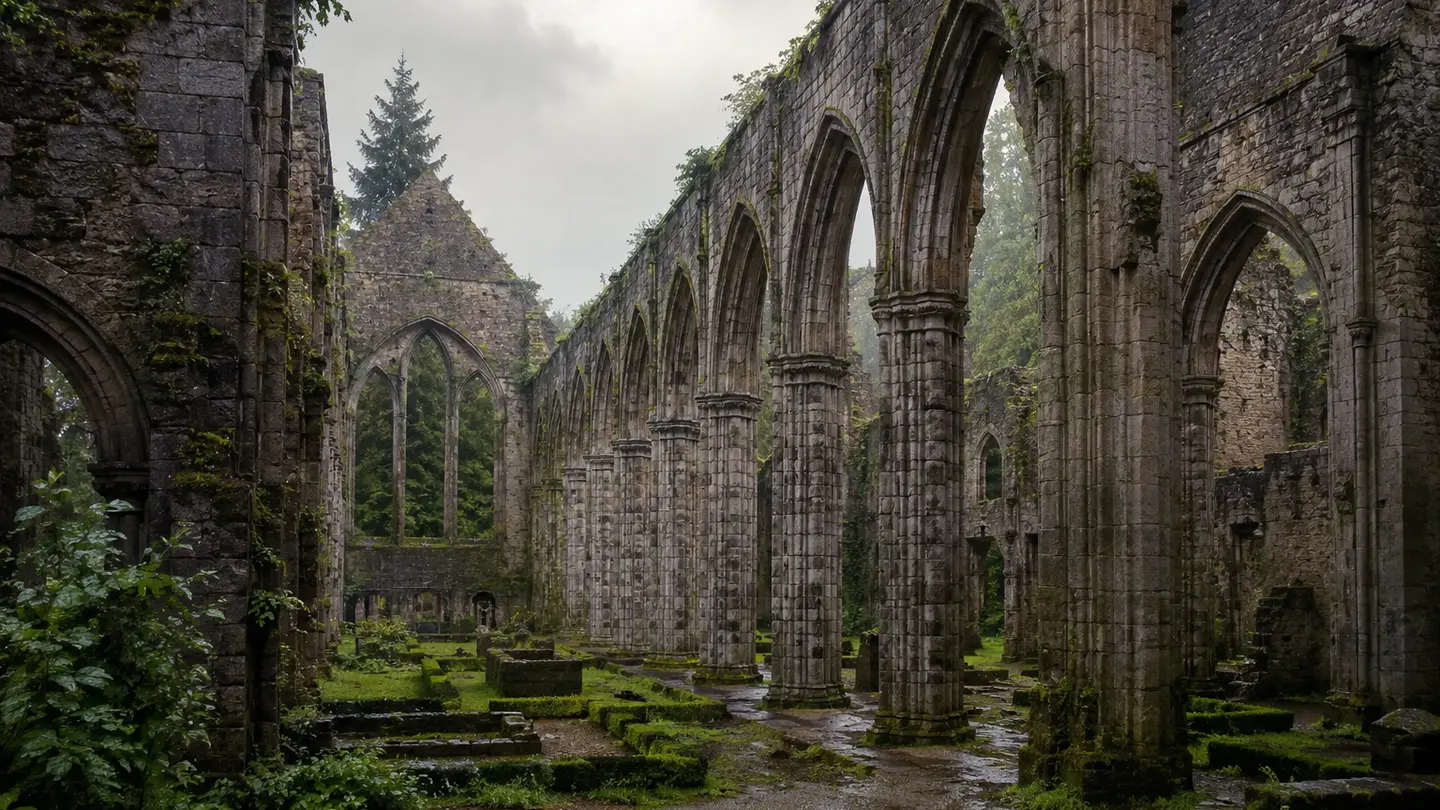
Villers-la-Ville preserves the vast ruins of a Cistercian abbey whose church, gardens and buildings allow to understand the organisation of a medieval community.
To be retained
- Grand Cistercian Abbey
- Landscape ruins
- Readable monastic organization
- Place of memory rather than active worship
History and context
Founded in 1146 with the support of Bernard de Clairvaux, the abbey has several periods of prosperity and crisis. Deleted from the French Revolution, it is sold and dismantled. The ruins become a romantic landscape in the 19th century and then a heritage site.
Why is this place spiritual?
The ideal Cistercian sought simplicity, work and community prayer, even though the abbey was also a great economic domain. Today, the place is no longer an active monastery but can carry memory, silence and reflection on the impermanence.
What the landscape makes you feel
The absence of roofs changes the scale: trees, rain and light cross the ancient liturgical spaces. The restored gardens remind the links between care, food and daily life.
Energy, atmosphere and feelings
The ruins can create a feeling of peace or melancholy. It is born of incomplete architecture and nature, not of a monastic energy preserved as a substance.
Discover with respect
- Do not confuse heritage ruin with active abbey.
- Respect fragile areas and events.
- Avoid romanticizing the difficulties of medieval life.
Sources