Introduction
Understanding the place
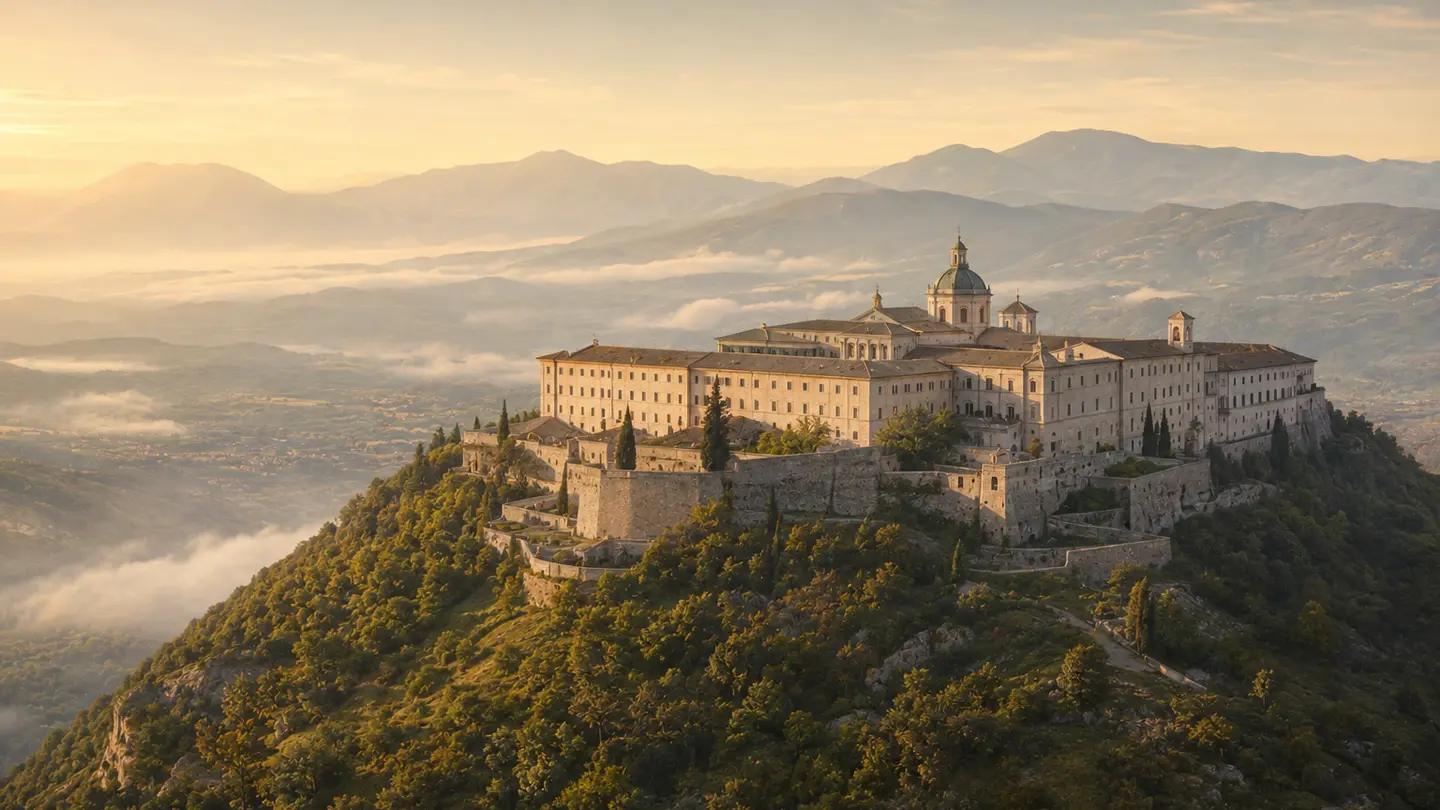
Founded by Benedict de Nursie around 529, the Mont Cassin is a central place in Benedictine history, rebuilt after numerous destructions including the bombing of 1944.
To be retained
- Founding place of Benedictine monasticism
- Rule of St Benedict
- Destruction and reconstruction
- Memory of the Second World War
History and context
Benedict established his community on a high hill overlooking the Liri Valley and composed, according to tradition, his Rule. The abbey became a major religious and cultural centre. Destroyed or damaged several times, it was almost completely razed during the Second World War and then rebuilt.
Why is this place spiritual?
The motto "ora et labora" imperfectly sums up a life where prayer, work, reading and stability s'balance. Reconstruction also gives the site a meaning of memory, loss and perseverance.
What the landscape makes you feel
The ascending road opens up to a clear and orderly architecture. Cloisters and views contrast with the military cemeteries of the region, which place the current calm in the history of the war.
Energy, atmosphere and feelings
The height and resilience of the site can be felt as a force. This impression is historical and symbolic, not a supernatural property of the summit.
Discover with respect
- Remember the civilians and soldiers who died in the battle.
- Respect monastic life.
- Avoid presenting reconstruction as an intact material continuity.
Sources