Introduction
Understanding the place
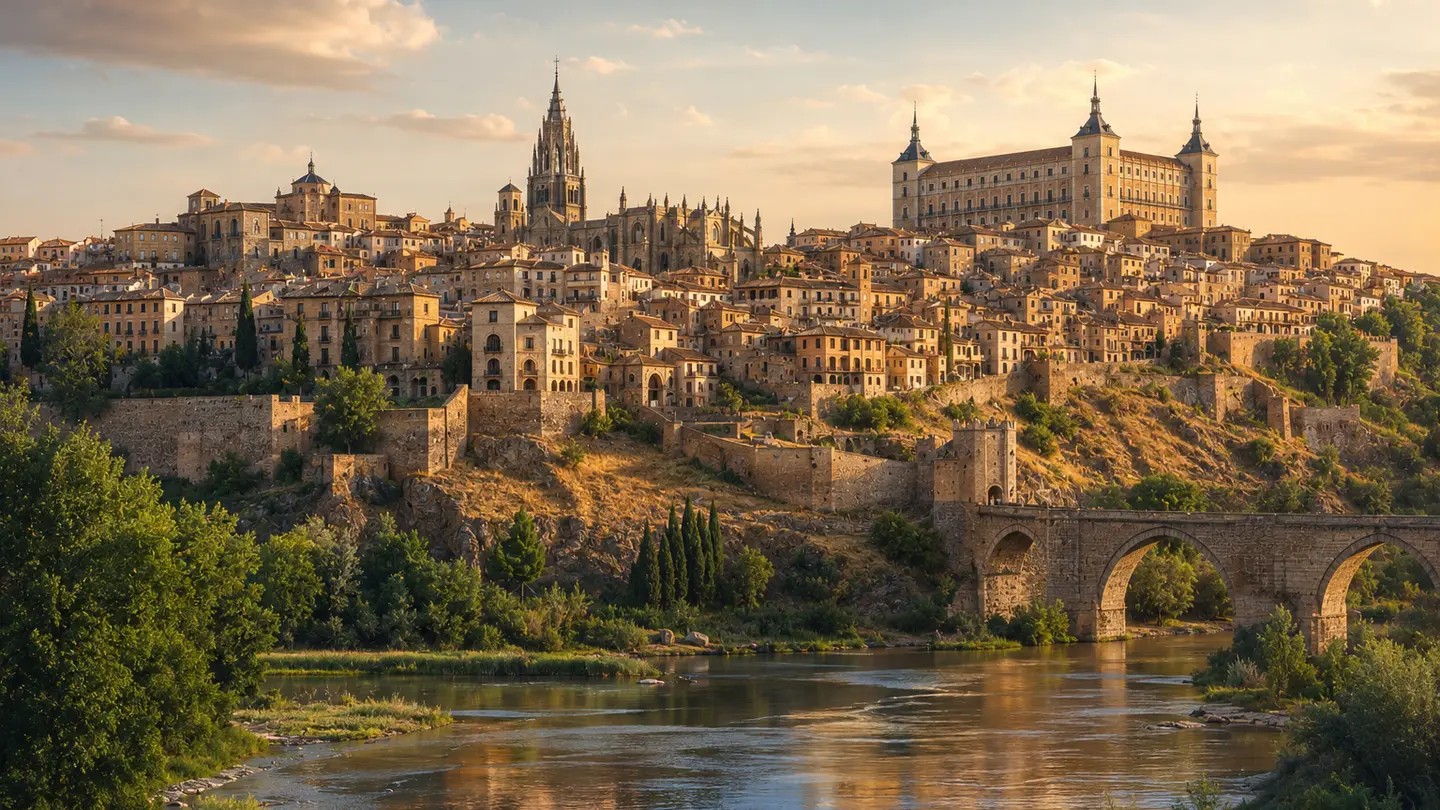
Toledo retains an exceptional Christian, Jewish and Muslim heritage, often summed up by the expression "city of the three cultures", to be used with nuance.
To be retained
- Jewish, Muslim and Christian heritage
- Medieval Translation Centre
- Real but uneven coexistence
- City of religious transformations
History and context
The Wisigothic capital, the city of D'al-Andalus, and then conquered by Alphonse VI in 1085, Toledo became a political, religious and intellectual centre. Scientists of various languages and denominations participated in medieval translations, but coexistence, segregation, forced conversions and expulsion of Jews in 1492 all belonged to its history.
Why is this place spiritual?
The cathedral, the former mosques and synagogues of Santa María la Blanca and Tránsito allow to approach several ways of inhabiting the sacred. Some buildings have changed their cult, recalling that the heritage is also made of power relations.
What the landscape makes you feel
The alleys, the Tagus and the mudéjar interiors create constant passages between styles and memories. The visit is more likely to connect monuments rather than isolate one.
Energy, atmosphere and feelings
The impression of historical layers can be very dense. It is a matter of urban memory and attention, not of specific energy.
Discover with respect
- Shaping the myth of a perfect convivencia.
- Name expulsions and forced conversions.
- Respect the current practices and memory of each community.
Sources