Introduction
Understanding the place
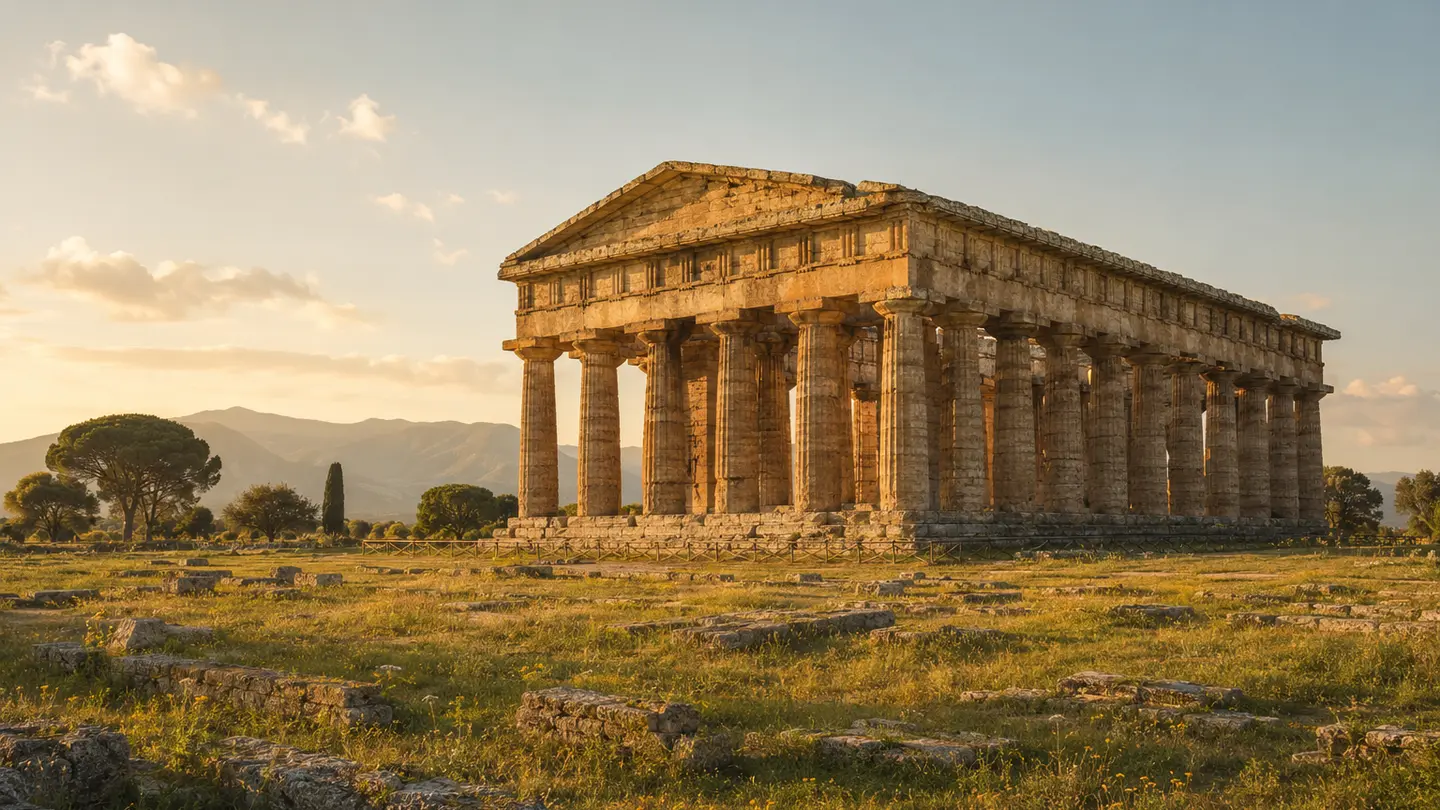
Paestum, the ancient Poseidonia, preserves three of the best preserved Greek temples: two associated with Hera and one traditionally attributed to Athena.
To be retained
- Exceptionally preserved Greek temples
- City of Poseidonia and Paestum
- Dedications revalued by archaeology
- Ancient civic religion
History and context
Founded by Greeks from Sybari around 600 BC, the city then passes under Lucanian and then Roman control. The identifications of the temples evolved with archaeology: modern names such as "Basic" or "Neptune temple" do not always correspond to probable dedications.
Why is this place spiritual?
The shrines belonged to a civic religion made of offerings, feasts, sacrifices and divine accounts. They are no longer active temples in the ancient sense, even though contemporary visitors can find a philosophical or neo-Pagan inspiration there.
What the landscape makes you feel
The Mediterranean light reveals the mass of the columns and the accuracy of their proportions. The proximity of the three buildings helps to compare several generations of Doric architecture.
Energy, atmosphere and feelings
Geometric beauty and seniority can be called "energy" in a personal language. There is no evidence that builders were looking for measurable telluric force.
Discover with respect
- Use the signings with the appropriate degree of uncertainty.
- Do not project modern esotericism on all ancient rites.
- Respect archaeological areas.
Sources