Introduction
Understanding the place
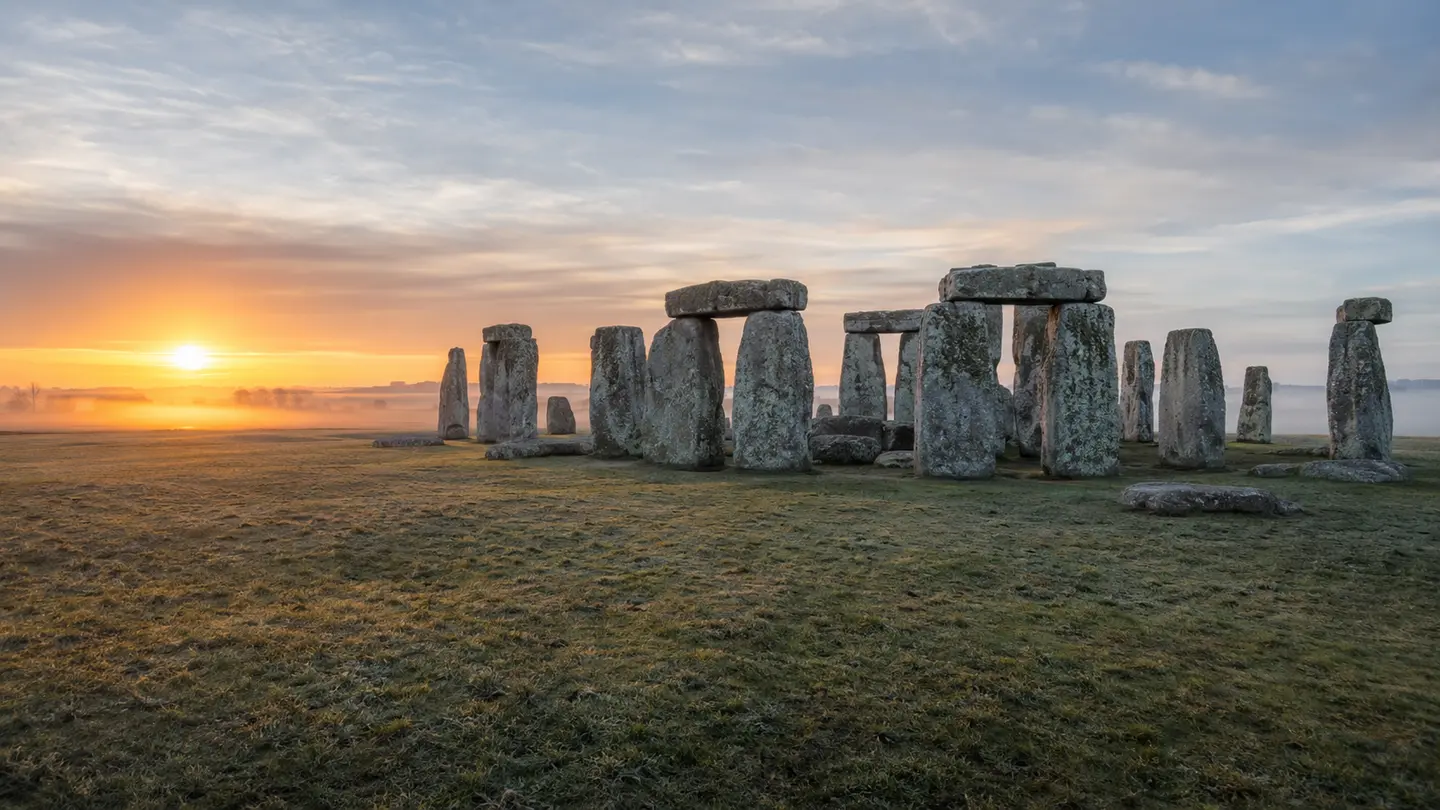
Stonehenge belongs to a vast prehistoric ritual and funeral landscape. Its erect stone architecture and solar alignments have generated modern archaeological research, fascination and spiritual reappropriation.
To be retained
- Multi-phase construction
- Rite landscape larger than the circle
- Significant solar alignments
- Exact function always debated
History and context
The site is built and transformed into several phases between about 3000 and 1600 BCEE.. The complex collective organizations are illustrated by the fact that the site has been built, raised, local stones and blocks transported over long distances, and its exact function has probably evolved and is not limited to an astronomical observatory.
Why is this place spiritual?
Prehistoric uses cannot be reconstructed with certainty, even though funeral practices, gatherings and solar cycles are clearly important. Modern Druids, neo-pagan and contemporary visitors today give him new meanings that should not be projected as they are on the Neolithic.
What the landscape makes you feel
The apparent simplicity of the circle contrasts with the engineering and depth of the surrounding landscape. The washes and beds close to the solstice reinforce the attention paid to the sky, but the daily visit also reveals the importance of the distances and the surrounding tumulus.
Energy, atmosphere and feelings
The assertions on landlines or measurable energy are not established by archaeology. Nevertheless, the feeling of power of the site can be described as a meeting between monumentality, seniority and natural cycles.
Discover with respect
- Do not automatically assign Stonehenge to ancient druids.
- Respect protected areas and access rules.
- Distinguish current archaeological data and neo-pagan practices.
Sources