Introduction
Understanding the place
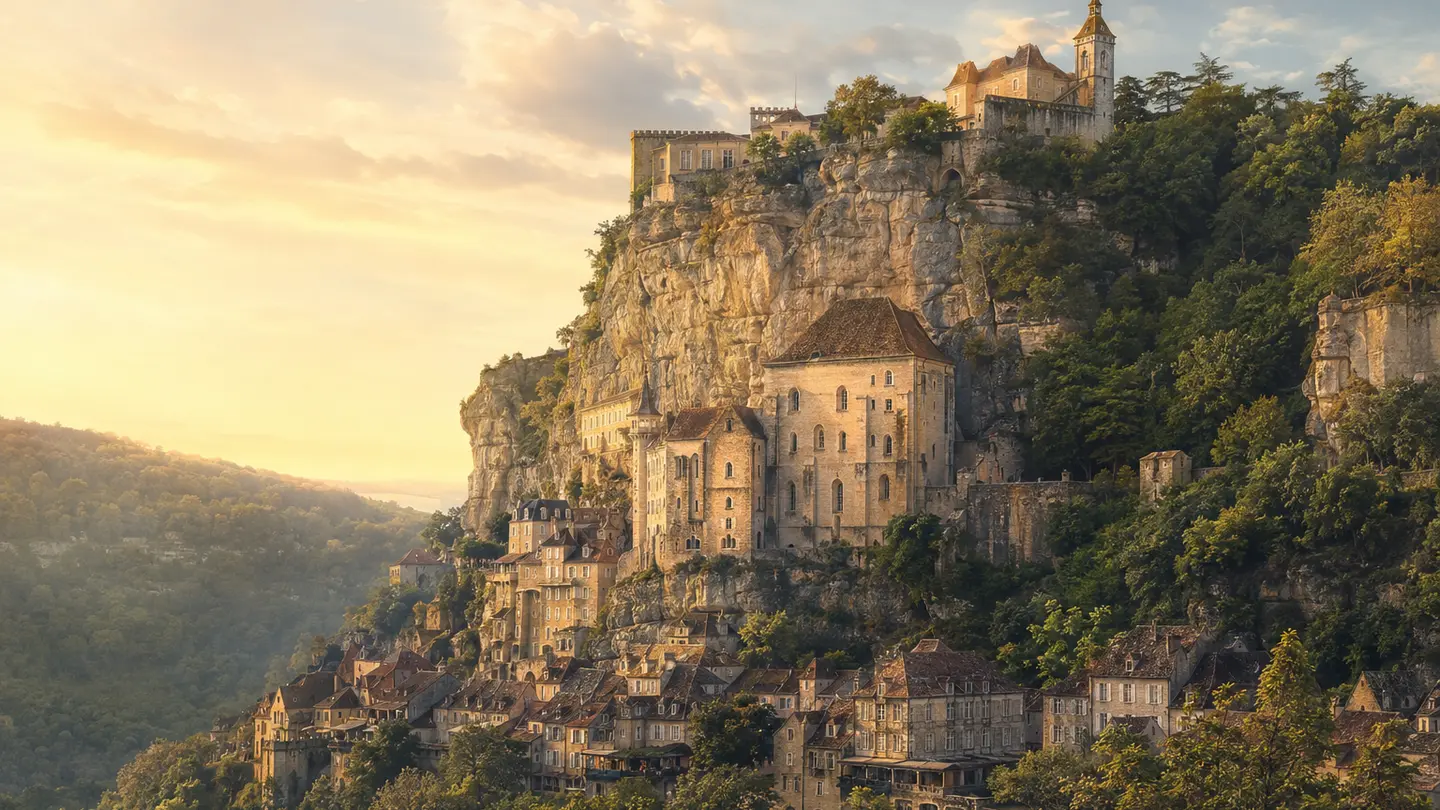
Rocamadour superposes village, shrines and fortifications in a cliff of the causse, around a medieval Marian pilgrimage and the tomb attributed to Saint Amadour.
To be retained
- Major Marian Shrine
- Architecture inserted into the cliff
- Stage of Compostela Paths
- Legends and history to be distinguished
History and context
The pilgrimage is attested to in the 12th century and is rapidly felt by Europeans. The chapel of Notre Dame houses a black Virgin, while the Basilica of Saint-Sauveur and the crypt of Saint-Amadour bear witness to the different strata of the sanctuary. Wars and restorations have profoundly transformed the whole.
Why is this place spiritual?
The climb of the stairs and the passage from the valley to the rock support a symbol of conversion and confidence. The Black Virgin is at the heart of the local Catholic devotion, but her legends must be distinguished from the documented chronology.
What the landscape makes you feel
The visitor discovers a vertical place: clear stone, steep walls, bells and views of the Alzou. Coming early allows to better perceive the scale of the sanctuary and its religious rhythm.
Energy, atmosphere and feelings
The collection of the valley and verticality can produce a strong body impression. Talking about energy remains a personal way of naming this atmosphere, not a measurement of the rock.
Discover with respect
- Leave the chapels available to prayer.
- Do not present legends as certain facts.
- Maintain the trails and the calm of the valley.
Sources