Introduction
Understanding the place
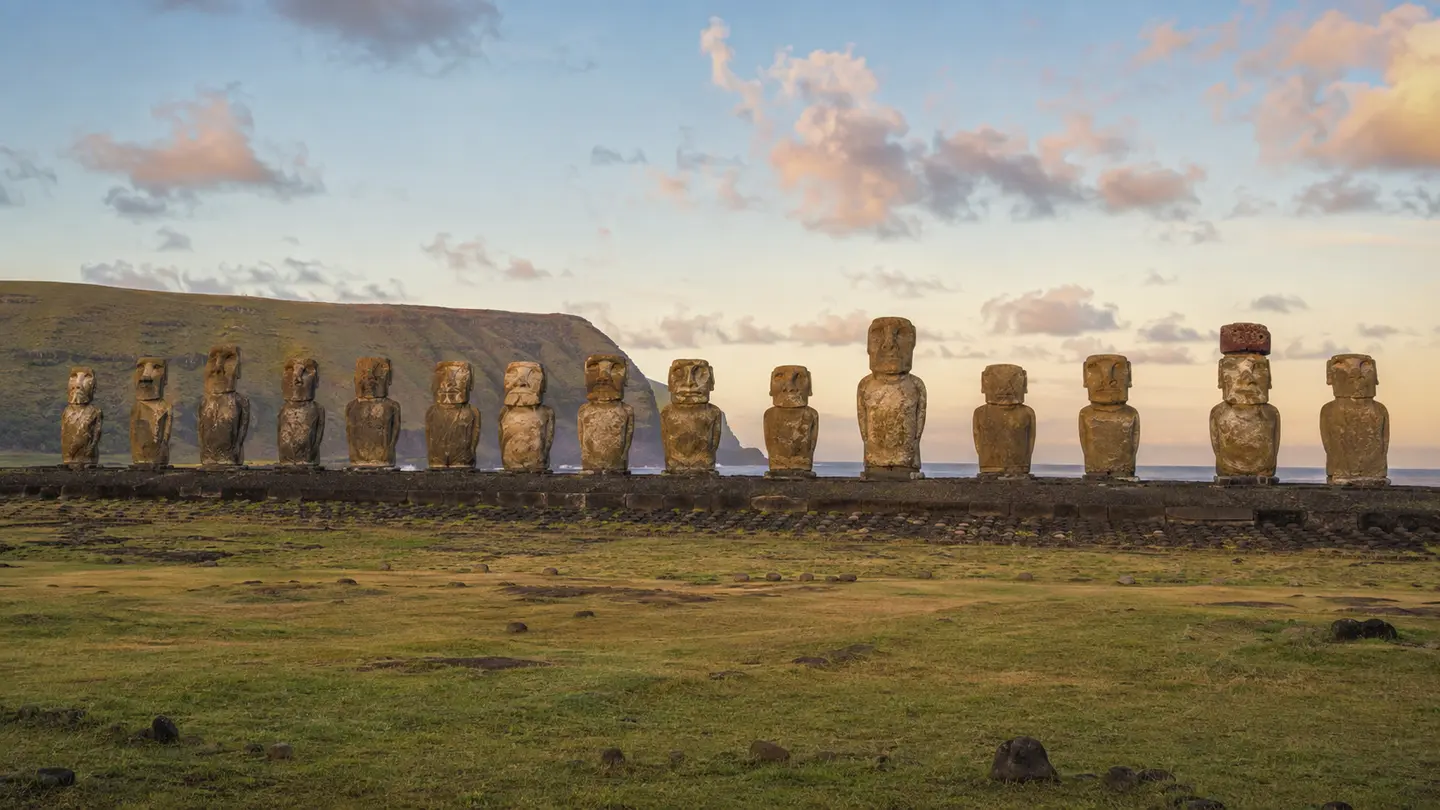
Rapa Nui is famous for its moai, but the island is primarily the territory of a living Polynesian people. statues, ahu platforms and quarries form a landscape of ancestral memory.
To be retained
- Living Polynesian Territory
- Moai related to ancestors
- Ahu as ceremonial platforms
- Mana to put in its cultural context
History and context
Polynesian navigators populate the island centuries ago. Communities sculpt and transport hundreds of moai, installed on ahus. Ecological transformations, conflicts, diseases, slave raids and colonization then profoundly upset society.
Why is this place spiritual?
Moai are mainly important ancestors and look at land and communities, not the sea. Mana, the power and relational efficiency in Polynesian worlds, is not limited to a tourist energy influence.
What the landscape makes you feel
Alignments like Ahu Tongariki impress, while Rano Raraku's career shows statues at different stages of creation. Understanding the moai demands to link sculpture, territory, genealogy and social organization.
Energy, atmosphere and feelings
Mana vocabulary must be used with context and respect. The alien stories or impossible technologies erase the skills of the rapanui ancestors.
Discover with respect
- Never touch or climb the moai or ahu.
- Respect guides and authorities of the raphanui.
- Refuse theories that dispossess the people of their achievements.
Sources