Introduction
Understanding the place
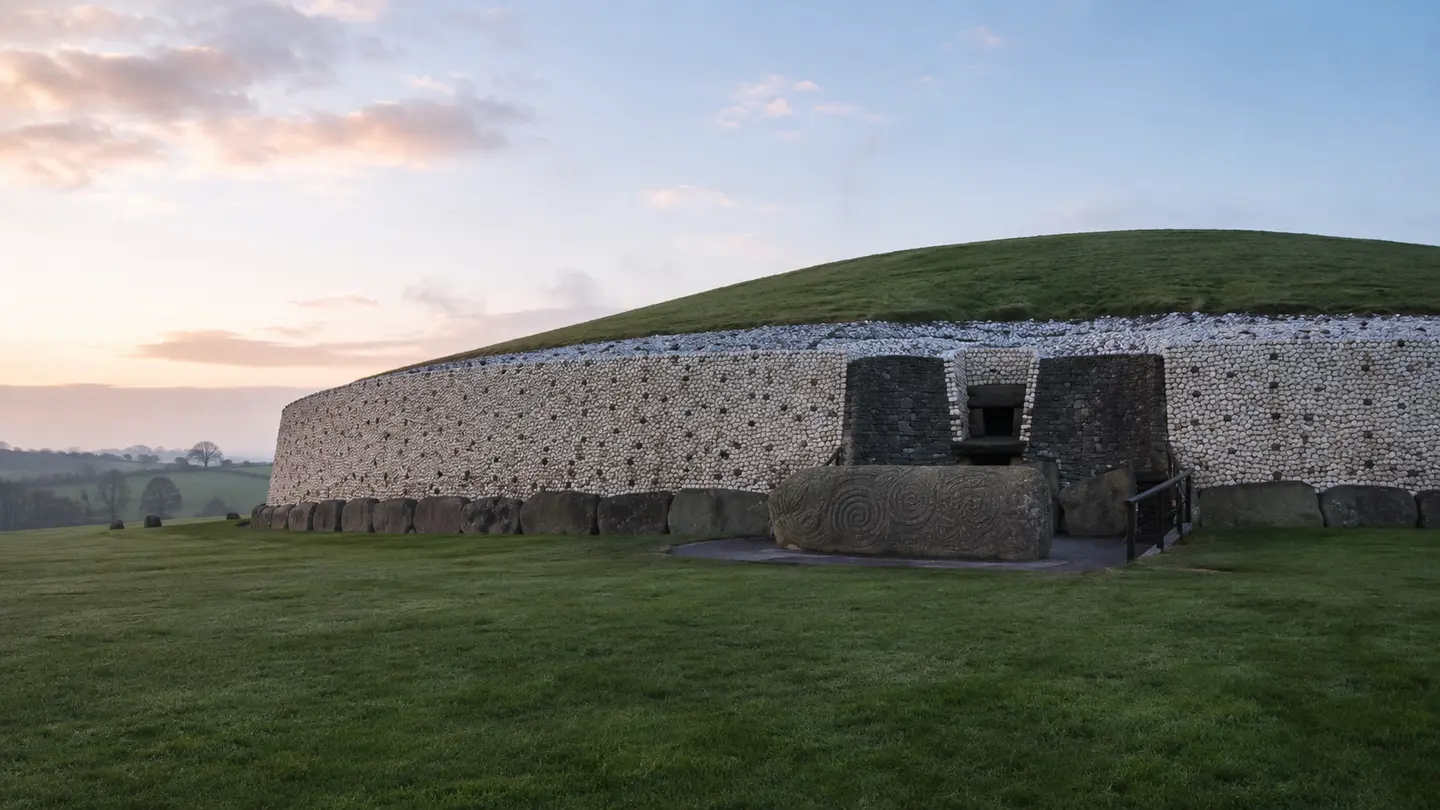
Newgrange is a large neolithic monument of Brú na Bóinne, famous for the passage of light from sunrise to its room during the winter solstice.
To be retained
- Monument more than five millennia old
- Orientation towards winter solstice
- Funeral and ritual function
- Remarkable megalithic art
History and context
Built around 3200 BCEE., the tumulus is pre-eminent to the pyramids of Giza and Stonehenge. Its long corridor, cruciform chamber, adorned stones and ingenious roofing box testify to a society capable of mobilizing considerable resources.
Why is this place spiritual?
Human deposits indicate a funeral dimension, but the monument probably articulated memory of the dead, collective identity and cosmic cycles. Later Irish mythological narratives associated Brú na Bóinne with the Tuatha Dé Danann; they illuminate the long cultural life of the landscape without directly describing its Neolithic builders.
What the landscape makes you feel
The inner chamber is tightened in contrast to the mass of the tumulus. The solar phenomenon, visible only under precise conditions, briefly transforms the darkness into a luminous event and explains in part the current symbolic strength of the site.
Energy, atmosphere and feelings
The spiritual energy narratives belong mainly to modern interpretations. Solar orientation, acoustics and enclosed space are observable realities that can generate intense experience without demonstrating a particular energy field.
Discover with respect
- To preserve a fragile archaeological monument.
- Do not confuse medieval myths with certain neolithic function.
- Respect limited access during solstice.
Sources