Introduction
Understanding the place
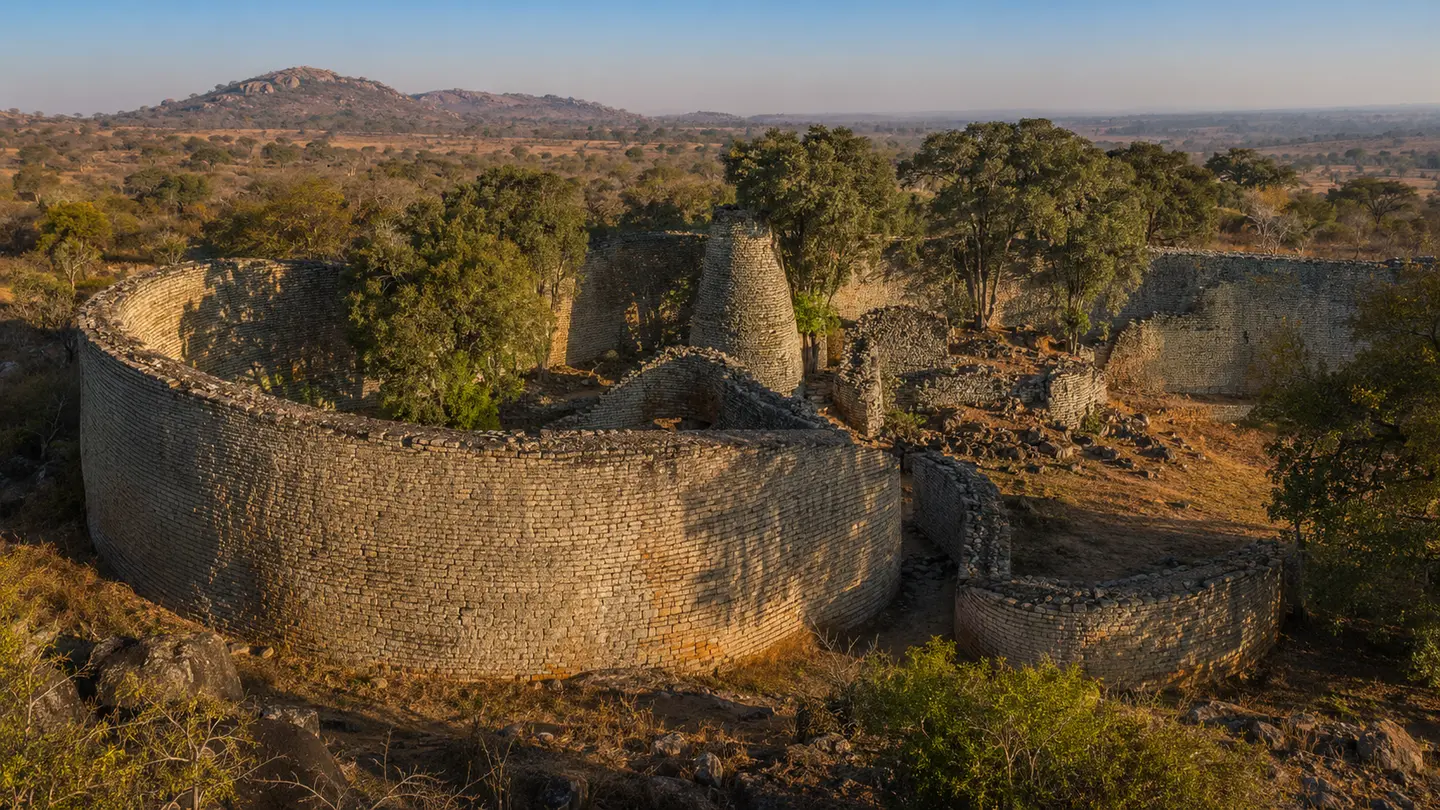
Greater Zimbabwe was the centre of a powerful medieval African state, with dry stone enclosures and landscape still linked to the memory of the Shona peoples and Zimbabwe's national history.
To be retained
- Medieval African Capital
- Dry stone architecture
- Shona memory and national identity
- History long distorted by colonialism
History and context
The site is at its peak between the 13th and 15th centuries, in the heart of networks linking the interior of southern Africa to the coast of the Indian Ocean. Its walls without mortar, residential spaces and imported objects testify to a complex society. The ancient colonial theories denying its African construction have been refuted.
Why is this place spiritual?
Beyond its political and economic function, the site is associated with ancestral authority and spiritual practices shona. Interpretations must give way to the communities concerned and avoid reducing the site to a spectacular ruin.
What the landscape makes you feel
The climb to the hill complex, and the discovery of the Great Precinct, allows us to understand the relationship between visibility, power and territory. The present silence must not hide the intense social life that has passed.
Energy, atmosphere and feelings
The stories of ancestral presence have a precise cultural meaning. They are neither superstitions to ridicule nor phenomena that archaeology could measure directly.
Discover with respect
- Recognize the African creation of the site.
- Listen to local heritage and community interpretations.
- Do not move stones or cross closed areas.
Sources