Introduction
Understanding the place
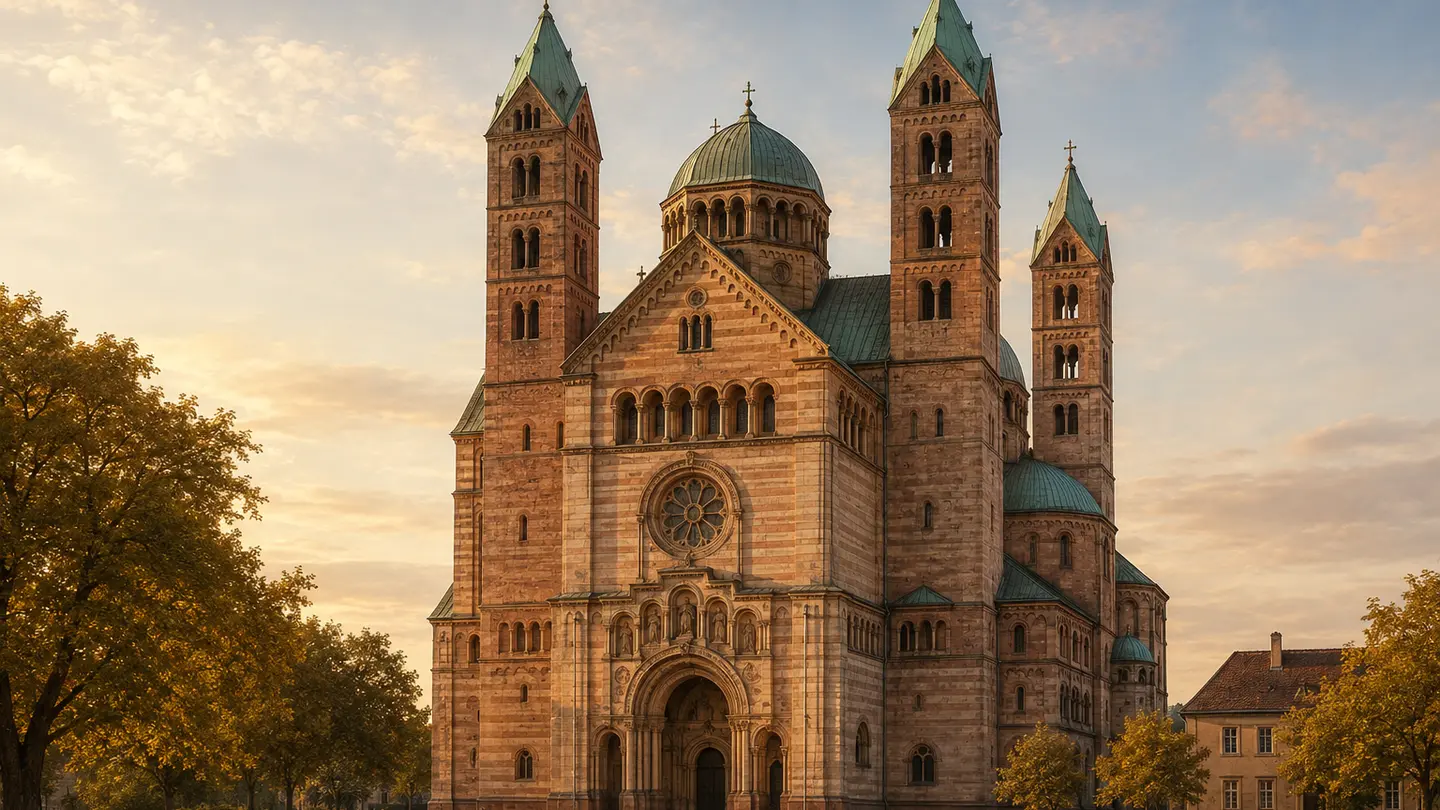
The Spire Cathedral is one of the largest preserved Romanesque buildings and houses the necropolis of several sovereigns of the Holy Empire.
To be retained
- Major Romanesque Monument
- Imperial necropolis
- Large medieval crypt
- Power and mortality in dialogue
History and context
Founded by Conrad II around 1030, it is enlarged under Henry IV and consecrated in the 11th century. Fires, wars and restorations have modified the monument, but its vaulted nave and crypt remain essential to understand imperial Romanesque architecture.
Why is this place spiritual?
The cathedral unites Christian worship, funeral memory and power representation. The crypt reminds us that political grandeur is reduced to mortality, a classic theme of Christian humility.
What the landscape makes you feel
The clear volumes, the regular spans and the vast crypt give an impression of stability. Romanesque sobriety contrasts with the exuberance of many Gothic cathedrals.
Energy, atmosphere and feelings
The architectural repetition and thickness of the stone can promote calm. The feeling arises from the perception and historical context, not from a demonstrated property of the building.
Discover with respect
- Respect tombs and liturgical spaces.
- Do not confuse religious sacrality with political glorification.
- Avoid unskinned energy claims.
Sources