Introduction
Understanding the place
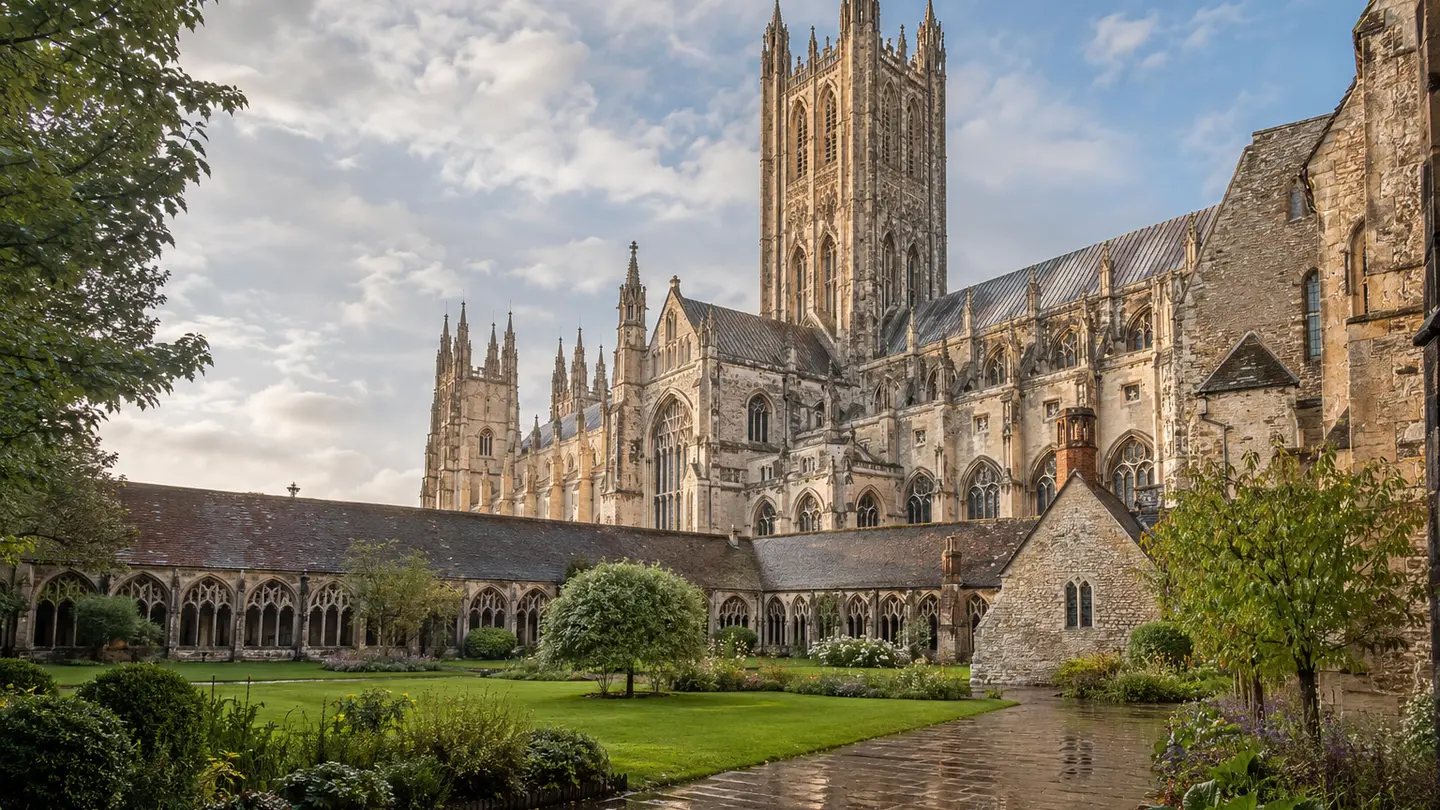
Canterbury is the seat of the Archbishop of Canterbury and a major site of the Anglican Communion, famous for the murder of Thomas Becket in 1170.
To be retained
- Major Headquarters of Anglicanism
- Mission d'Augustin
- Martyr of Thomas Becket
- Medieval and modern pilgrimage
History and context
Augustine established his mission in Canterbury at the end of the sixth century. The Norman and Gothic cathedral then developed over centuries. The assassination of Archbishop Thomas Becket in the church made him a great medieval pilgrimage, which was abolished during the Reformation.
Why is this place spiritual?
The cathedral represents both Christian continuity, memory of the conflict between religious consciousness and power, and Anglican identity. Modern pilgrimage sometimes takes up the paths evoked by Chaucer.
What the landscape makes you feel
Cloisters, crypts, choirs and martyrdoms produce a spatial narrative. Stones also carry the ruptures of the Reformation and wars.
Energy, atmosphere and feelings
The emotion of the murder scene and liturgical continuity may seem very strong, and they are a matter of memory and ritual, not of a physical phenomenon.
Discover with respect
- Respect Anglican offices.
- Do not reduce Thomas Becket to a legend without a political context.
- Observe the rules of photography.
Sources