Introduction
Understanding the place
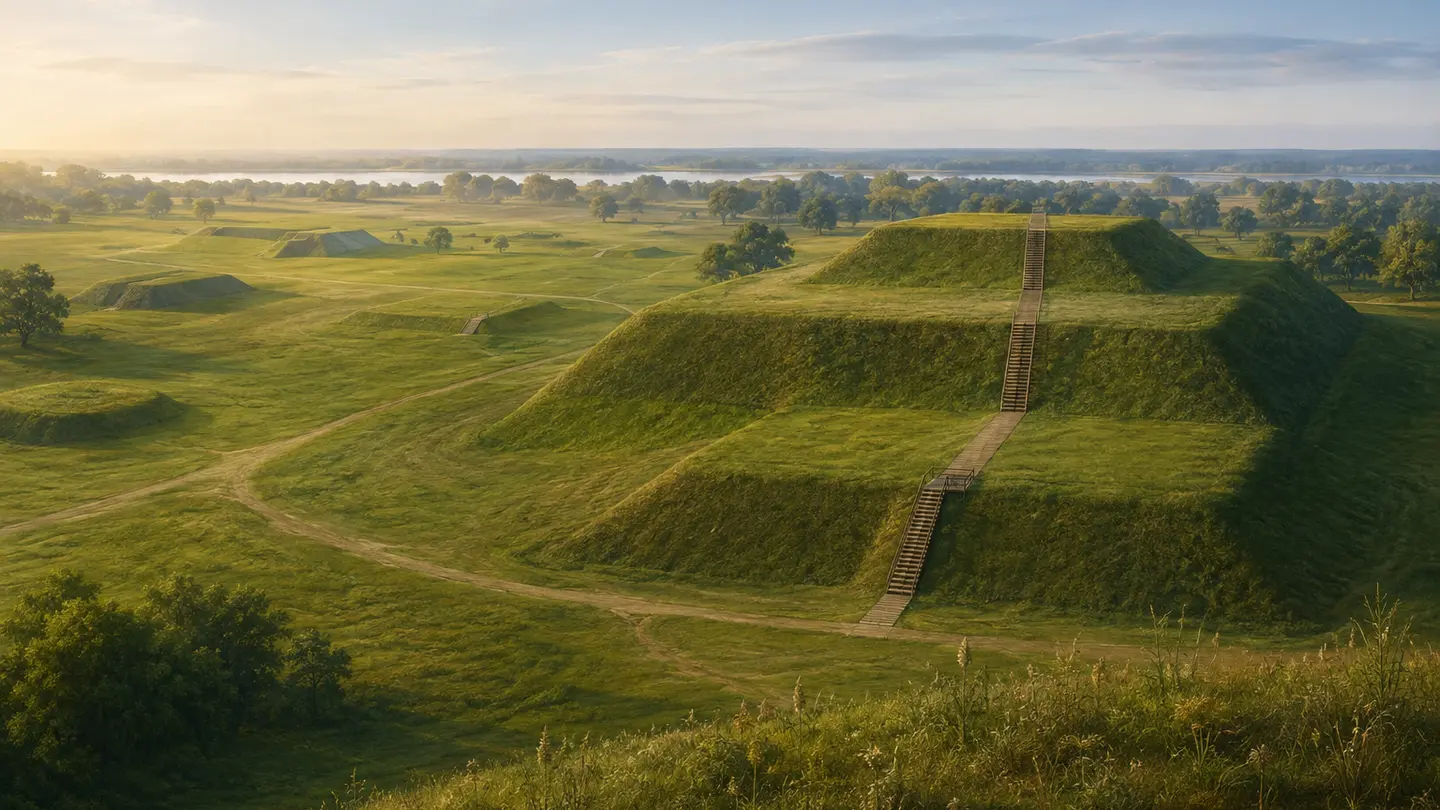
Cahokia was the largest urban centre in the Mississippian world, with dozens of terres, squares, neighborhoods and networks connecting much of North America.
To be retained
- Larger Mississippian center
- Terts and monumental squares
- Complex Aboriginal City
- Memory and descendants to be recognized
History and context
The city grew rapidly around 1050 and probably brought together diverse populations. Monks Mound, the Grand Plaza, the poles and the burials were a testament to a complex political and ceremonial organization. The decline preceded direct European colonization, but regional indigenous traditions did not disappear.
Why is this place spiritual?
The terres related authority, ancestors, cosmos, gatherings and sometimes burials. Their function varied. To present them only as American pyramids imposes a foreign comparison and masks their context.
What the landscape makes you feel
From Monks Mound, the flat expanse allows to imagine places and neighborhoods that are now erased. The site requires an effort of interpretation rather than an admiration of vertical ruins.
Energy, atmosphere and feelings
Geometry and orientations do not indicate any secret energy, their power lies in the societies that designed them and in the indigenous memories.
Discover with respect
- Do not walk on closed mounds.
- Respect funeral areas.
- Avoid the myth of a mysteriously disappeared civilization without descendants.
Sources