Introduction
Understanding the place
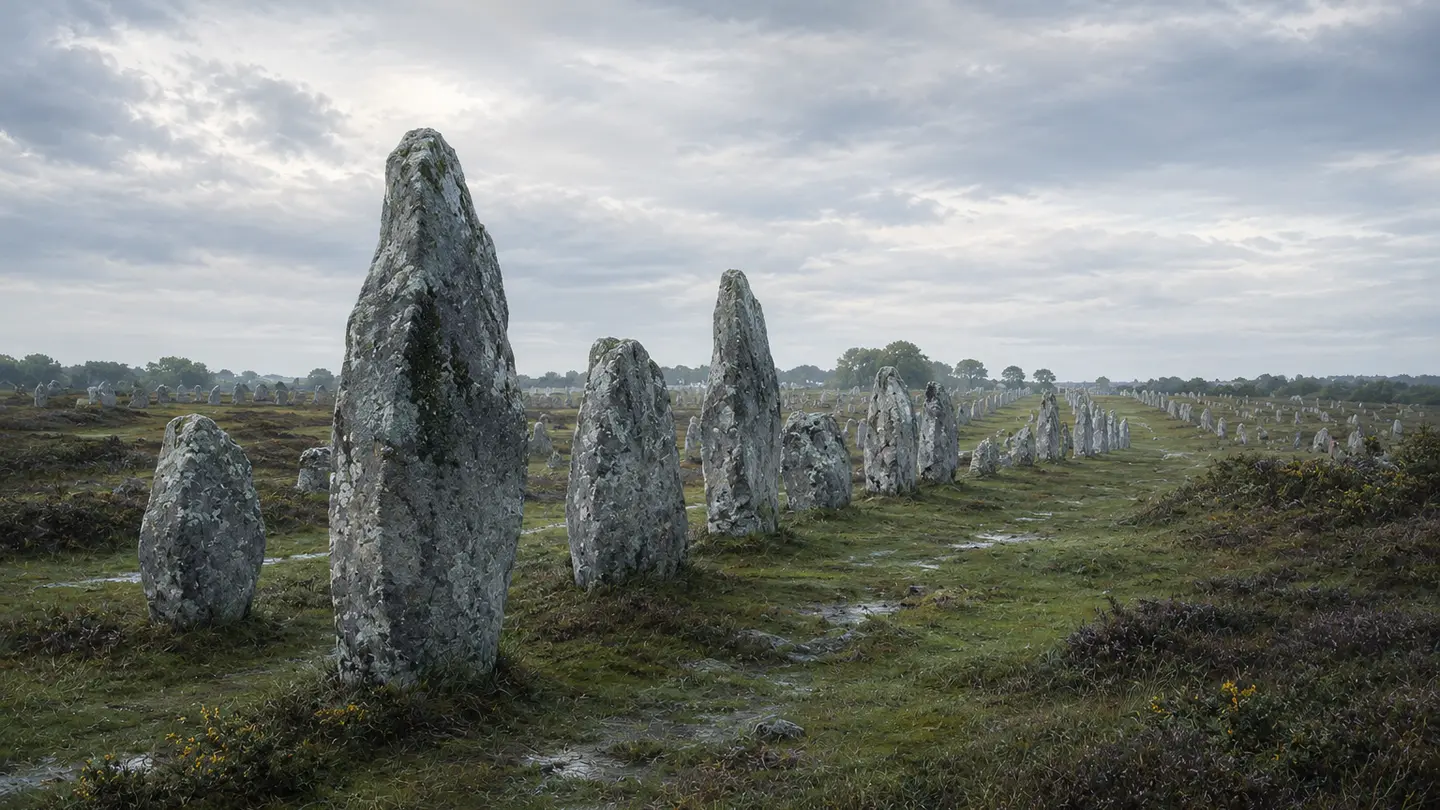
Carnac's alignments, dolmens and tumulus belong to a vast monumental neolithic landscape built over several millennia around the Morbihan.
To be retained
- Major Neolithic Ensemble
- Previous to the Historical Celts
- Multiple functions still under study
- UNESCO registration in 2025
History and context
Monuments are the work of neolithic communities that are very much prior to the historic Celts. Their diversity indicates funeral, territorial, social and probably ritual uses, without any single theory explaining the whole. The property was inscribed on the World Heritage in 2025.
Why is this place spiritual?
There is no text to reconstruct the beliefs of builders. Current Druidic and neo-Pagan practices give the site new meanings, legitimate as contemporary uses but distinct from the unknown neolithic religion.
What the landscape makes you feel
Long lines of menhirs alter the perception of distances and relief. Walking around the authorized sets reveals the relationships between stone, horizon, water and tumulus.
Energy, atmosphere and feelings
The narratives of landline alignments or of the powers of stones are not shown. Monumentality and seniority are sufficient to produce astonishment and feeling of presence.
Discover with respect
- Do not attribute monuments to ancient druids.
- Follow accesses to protect floors and stones.
- Present the neo-Pagan uses as contemporary.
Sources