Introduction
Understanding the place
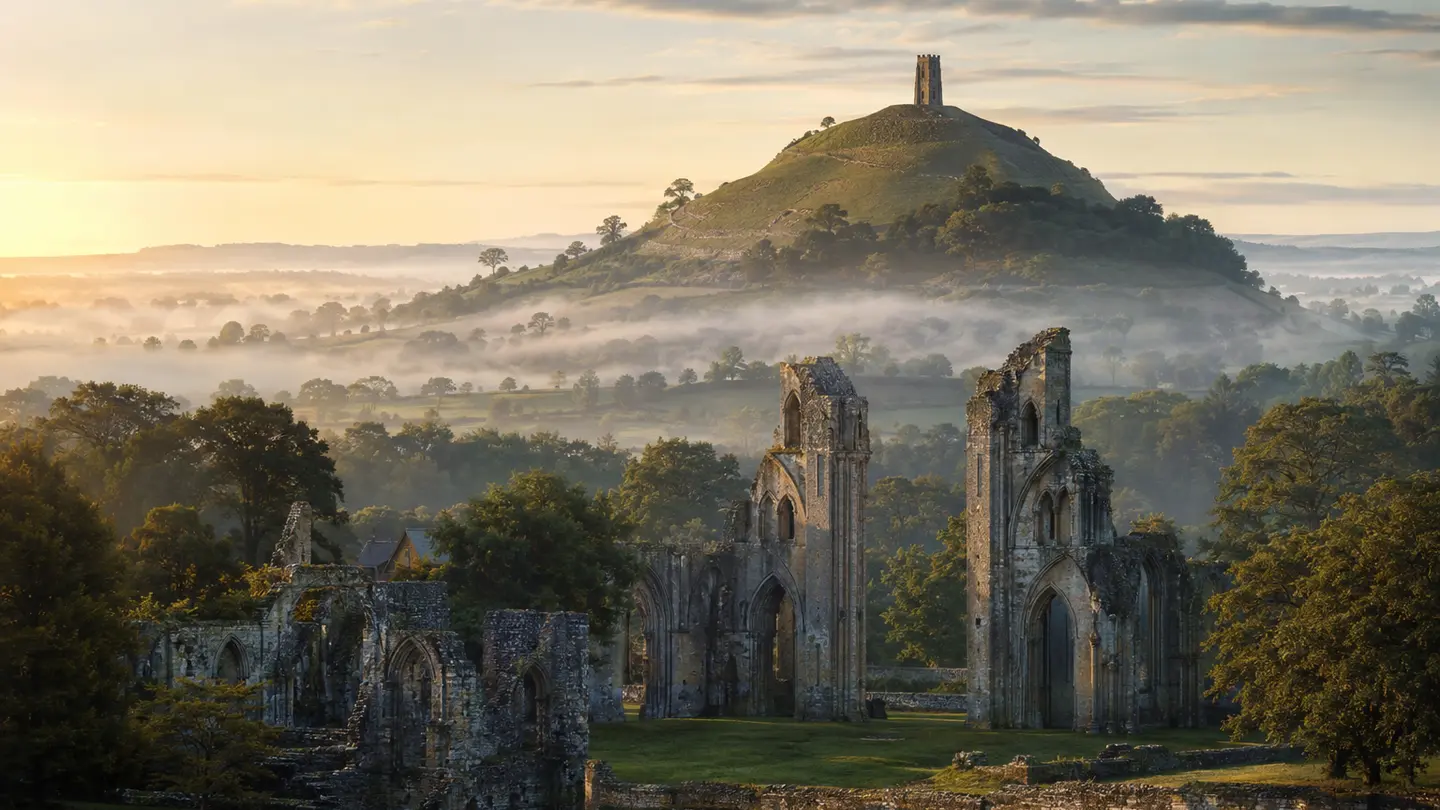
Glastonbury combines a prestigious former abbey, the Tor dominating somerset levels, traditions related to Joseph d'Arimathie and Arthur, and a very diverse contemporary spiritual culture.
To be retained
- Medieval Abbey in ruins
- Imbolic Tor
- Arthurian legends
- Contemporary pluralistic spiritual centre
History and context
The medieval abbey became one of the richest in England before its dissolution in 1539. The monks claimed in the 12th century to have discovered the tombs of Arthur and Guinevere, a claim generally understood in the political and economic context of the abbey. The Tor bears traces of ancient occupation and a medieval tower.
Why is this place spiritual?
Christians, neo-Pagans, Goddess followers and New Age researchers today give instead of different meanings. No single narrative should erase this plurality or transform legends into historical certainty.
What the landscape makes you feel
The windy rise of the Tor opens a vast horizon; the ruins of the Abbey offer a more horizontal and funerary experience. The city connects both through its shops and communities.
Energy, atmosphere and feelings
Glastonbury is often described as heart chakra or center of telluric lines. These ideas are modern and undemonstrated, even though the landscape and imagination can sustain a deep experience.
Discover with respect
- Distinguish Arthurian legend and history.
- Respect the many groups without validating all their claims.
- To preserve Tor and fragile terrain.
Sources